UN Security Council Resolution 2397 on North Korea

https://usun.state.gov/remarks/8238

December 22, 2017

In response to the November 29, 2017 intercontinental ballistic missile (ICBM) launch by North Korea, United Nations Security Council resolution (UNSCR) 2397 imposes strong new sanctions on North Korea’s energy, export, and import sectors with new maritime authorities to help shut down North Korea’s illicit smuggling activities. UNSCR 2397 builds on UNSCR 2375 (2017), which included the strongest sanctions ever imposed on North Korea, and prior resolutions. This resolution imposes the following measures:

1. Refined Petroleum Products (OP5): Reduces UNSCR 2375 annual cap on refined petroleum exports by 75% to allow a maximum of 500,000 barrels/year to North Korea.

  • In 2016, North Korea imported 4.5 million barrels/year of refined petroleum.
  • After the September nuclear test, the Security Council capped refined petroleum exports to North Korea at 2 million barrels.
  • By reducing this cap to 500,000 barrels, North Korea’s import of gasoline, diesel, and other refined products will be cut by a total of 89% from summer 2017.

2. Crude Oil (OP4): Strengthens UNSCR 2375 freeze on crude oil by establishing a 4 million barrels/year or 525,000 tons/year annual limit. Increases transparency of crude oil provided to North Korea by requiring supplying member states to provide quarterly reports to the 1718 Sanctions Committee on amounts of crude oil provided to North Korea.

3. Commitment to Future Oil Reductions (OP27): Commits the Security Council to reduce further petroleum exports to North Korea following another nuclear test or an ICBM launch, sending a strong new political signal to North Korea about future Security Council responses.

4. Countering Maritime Smuggling (OPs 9-15): Provides additional tools to crack down on smuggling and sanctions evasion, including a new requirement for countries to seize and impound ships caught smuggling illicit items including oil and coal.

5. North Korean Overseas Workers (OP8): Requires countries to expel all North Korean laborers earning income abroad immediately but no later than 24 months later (end of 2019).

  • The North Korean regime is believed to be earning over $500 million each year from heavily taxing the nearly 100,000 overseas North Korean workers, with as many as 80,000 working in China (about 50,000) and Russia (about 30,000) alone.
  • Exempts the repatriation of North Korean defectors, refugees, asylum seekers, and trafficking victims who will face persecution and torture when repatriated by the North Korean regime.

6. Ban DPRK Exports (OP6): Bans all remaining categories of major DPRK exports.

  • Previous Security Council resolutions banned North Korea’s export sectors covering around 90% of its export revenue (e.g., coal, textiles, seafood, iron).
  • Banning the remaining major export sectors – including food, agricultural products, minerals machinery, electrical equipment – will cut off $200 million or more of annual export revenues.
  • Revenues from these exports in 2016 constituted nearly 10% of total exports or $264 million.

7. Ban DPRK Imports (OP7): Bans North Korea from importing heavy machinery, industrial equipment, and transportation vehicles, which constituted about 30% of North Korea’s 2016 imports worth nearly $1.2 billion. Exempts the provision of spare parts for civilian passenger aircraft for air safety reasons.

8. Protects Humanitarian and Diplomatic Activities in North Korea: Imposes new measures aimed at the North Korean regime and the elite by targeting industrial and other major economic activities while preventing North Korea from exporting food and agricultural products. Provides a number of exemptions aimed at protecting the delivery of humanitarian assistance to the North Korean people and not impeding the work of diplomatic and consular missions operating in North Korea.

9. Sanctions Designations (Annexes): Adds 16 new individuals and 1 entity connected to the financing and development of North Korea’s nuclear and ballistic missile programs to the UN’s sanctions list.

Links:

I Grew Up Around Korean Beauty Products. Americans, You’ve Been Had.

https://www.nytimes.com/2017/12/09/opinion/sunday/korean-beauty-products-america.html

By Euny Hong

I admit it: I use Korean snail slime face serum. It’s purported to contain anti-aging properties. I have no opinion as to whether snails are particularly young-looking, but my experience is that their excretions do work on humans. That aside, as someone who grew up among Korean beauty products, I find the world’s sudden fascination with Korean skin care, and its now-famous 12-step regimen, to be comical.

Dozens of articles in the Western press claim that Korean beauty innovation is 10 years ahead of the rest of the world. So … in beauty terms, South Korea is in the year 2027?

It gets better: “K-beauty,” as it is often called, is not just futuristic; it’s ancient as well. According to at least three English-language beauty websites, Korean skin care rituals date back to some purported document from 700 B.C. If Koreans have had a 12-step skin care program for 2,700 years, I’m not sure why they decided to sit on it until the 1990s. But no matter.

In the last six years, Korean cosmetics in the United States have gone from nonexistent to almost mainstream. According to data from Kotra, Korea’s trade promotion agency, K-beauty exports to the United States more than doubled from 2014 to 2016. The global cosmetics chain Sephora started carrying K-beauty products in 2011. Other retail chains followed suit, including Urban Outfitters, Ulta and the drugstore chain CVS, all of them touting products with ingredients like chrysanthemum and ginseng. How did Americans come to view South Korea as this beautiful-skinned Eden, when, until a few decades ago, it was impoverished and chokingly polluted.

I lived in Seoul from ages 12 to 18. South Korea was still a developing country when I arrived in 1985, when its inflation-adjusted per capita G.D.P. was about one-fourth of what it is today. Its growing pains showed in the country’s dodgy goods.

These days, K-beauty products come in sculptured packaging and smell like an upscale spa. But when I was growing up, Korean skin creams were all the same shade of toilet-paper pink, and they smelled like Glade PlugIns. Any Korean with means used French and American cosmetics (and the Japanese brand Shiseido). No one had ever heard of such a thing as a 12-step regime.

That all changed in the early 1990s. South Korea became wealthy; the quality of everything from cars to CD players improved. Then, in 1998, spurred by the Asian financial crisis, the Korean government altered its economic strategy, branching out from heavy industry and electronics-focused conglomerates into pop culture businesses. Korea was rebranded a “cool” country.

Most of this new “coolness” took the form of mass-produced and exported cinema, television and pop music. But all Korean industries benefited. The popular Korean beauty chains Innisfree and the Face Shop both opened in the early 2000s — around the same time that we first started hearing about the Korean triple cleanse.

Until very recently, K-beauty’s presence in the West was largely a matter of prestige, not money. It was the Asian market that really mattered, especially China. It still does: In 2016, China bought about 38 percent of K-beauty exports and Hong Kong 30 percent, according to Kotra.

But geopolitics may be forcing the K-beauty industry to pivot westward. South Korea has been rethinking the precariousness of an export strategy that is too dependent on China, a country that is not only allied with North Korea, but is also becoming a direct competitor in manufacturing and of late, pop culture and television dramas.

Korean industry got a glimpse of the perils of mixing politics and trade in July 2016, when South Korea announced that it would deploy the American-made Thaad missile defense system. China perceived the move as hostileand threatened sanctions; in March, Chinese tourism in South Korea was down 40 percent from the same month in 2016, resulting in an estimated loss of $6.5 billion in revenue.

South Korea put the Thaad project on hold this June, and the two nations appear to be on better terms now. Still, the backlash gave Korean business a fright and an impetus to seek out new markets. It’s no coincidence that South Korea’s top boy band, BTS, chose this year to make a splashy American debut, while the Korean bakery chain Paris Baguette announced recently that it was planning to open at least 300 more stores in the United States by 2020.

And K-beauty, too, has moved aggressively. Innisfree, which offers products from the volcanic Korean island of Jeju, opened a Manhattan branch in September. AmorePacific, one of South Korea’s oldest beauty companies, plans to open 100 American branches of its retail chain Aritaum, a sort of Korean Sephora, within the next three years.

It’s clear what the K-beauty industry wants from the West: a market that isn’t fraught with messy geopolitics. But what explains why K-beauty has been embraced in the West with such gusto? Has the old Orientalist belief in ancient Asian beauty secrets struck again? There are certainly echoes of this in the marketing. Sulwhasoo, part of the AmorePacific family, advertises its products as containing “Korean herbal medicine drawn from Asian wisdom.”

Or is it because Korean women themselves, with their glowing complexions, are serving as walking advertisements for the power of K-beauty? If so, America, you’ve been had: ginseng and Jeju volcano water are not the whole story behind that flawless skin.

For the past several years, beauty-obsessed South Korea has been among the world’s capitals of cosmetic surgery. Some 20 percent of Korean women have had some form of work done.

Then, there’s Botox. Several Korean news outlets this year reported a studyfinding that 42 percent of Korean women ages 21 to 55 have had either Botox or filler injections.

Many wrinkle creams worldwide contain retinol, a vitamin A derivative that is harmless in small doses but not large ones. Some Korean cosmetics contain concentrations of retinol as high as 3.8 percent — about twice that of their highest-concentrated American counterparts.

Ancient beauty secrets, or Accutane? Korean doctors prescribe isotretinoin-based acne medicine “indiscriminately,” to quote the Korean daily JoongAng Ilbo, despite the risk of serious side effects.

If there are such things as “Korean beauty secrets” they seem to amount to this: Put a lot of time, money and energy into your skin, and you’ll probably see results (just don’t export too much to China).

But what do I know? I’m the one putting snail slime on my face.

——————

Euny Hong is the author of “The Birth of Korean Cool: How One Nation Is Conquering the World Through Pop Culture.”

Security Council Imposes Fresh Sanctions on Democratic People’s Republic of Korea, Including Bans on Natural Gas Sales, Work Authorization for Its Nationals

https://www.un.org/press/en/2017/sc12983.doc.htm

https://www.un.org/sc/suborg/en/sanctions/1718/resolutions

Resolution 2375 (2017)

Adopted by the Security Council at its 8042nd meeting, on 11 September 2017

The Security Council,

Recalling its previous relevant resolutions, including resolution 825 (1993), resolution 1695 (2006), resolution 1718 (2006), resolution 1874 (2009), resolution 1887 (2009), resolution 2087 (2013), resolution 2094 (2013), resolution 2270 (2016), resolution 2321 (2016), resolution 2356 (2017), resolution 2371 (2017) as well as the statements of its President of 6 October 2006 (S/PRST/2006/41), 13 April 2009 (S/PRST/2009/7), 16 April 2012 (S/PRST/2012/13), and 29 August 2017 (S/PRST/2017/16),

Reaffirming that proliferation of nuclear, chemical and biological weapons, as well as their means of delivery, constitutes a threat to international peace and security,

Expressing its gravest concern at the nuclear test by the Democratic People’s Republic of Korea (“the DPRK”) on September 2, 2017 in violation of resolutions 1718 (2006), 1874 (2009), 2087 (2013), 2094 (2013), 2270 (2016), 2321 (2016), 2356 (2017), and 2371 (2017) and at the challenge such a test constitutes to the Treaty on Non-Proliferation of Nuclear Weapons (“the NPT”) and to international efforts aimed at strengthening the global regime of non-proliferation of nuclear weapons, and the danger it poses to peace and stability in the region and beyond,

Underlining once again the importance that the DPRK respond to other security and humanitarian concerns of the international community and expressing great concern that the DPRK continues to develop nuclear weapons and ballistic missiles by diverting critically needed resources away from the people in the DPRK who have great unmet needs,

Expressing its gravest concern that the DPRK’s ongoing nuclear- and ballistic missile-related activities have destabilized the region and beyond, and determining that there continues to exist a clear threat to international peace and security,

Underscoring its concern that developments on the Korean Peninsula could have dangerous, large-scale regional security implications,

Underscoring its commitment to the sovereignty, territorial integrity, and political independence of all States in accordance with the Charter, and recalling the purposes and principles of the Charter of the United Nations,

Expressing also its desire for a peaceful and diplomatic solution to the situation, and reiterating its welcoming of efforts by Council members as well as other Member States to facilitate a peaceful and comprehensive solution through dialogue,

Underlining the need to ensure international peace and security, and ensure lasting stability in north-east Asia at large and to resolve the situation through peaceful, diplomatic and political means,

Acting under Chapter VII of the Charter of the United Nations, and taking measures under its Article 41,

  1. Condemns in the strongest terms the nuclear test conducted by the DPRK on September 2 of 2017 in violation and flagrant disregard of the Security Council’s resolutions;
  2. Reaffirms its decisions that the DPRK shall not conduct any further launches that use ballistic missile technology, nuclear tests, or any other provocation; shall immediately suspend all activities related to its ballistic missile program and in this context re-establish its pre-existing commitments to a moratorium on all missile launches; shall immediately abandon all nuclear weapons and existing nuclear programs in a complete, verifiable and irreversible manner, and immediately cease all related activities; and shall abandon any other existing weapons of mass destruction and ballistic missile programs in a complete, verifiable and irreversible manner;

Designations

  1. Decides that the measures specified in paragraph 8 (d) of resolution 1718 (2006) shall apply also to the individual and entities listed in Annex I and II of this resolution and to any individuals or entities acting on their behalf or at their direction, and to entities owned or controlled by them, including through illicit means, and decides further that the measures specified in paragraph 8 (e) of resolution 1718 (2006) shall also apply to the individual listed in Annex I of this resolution and to individuals acting on their behalf or at their direction;
  2. Decides to adjust the measures imposed by paragraph 8 of resolution 1718 (2006) through the designation of additional WMD-related dual-use items, materials, equipment, goods, and technology, directs the Committee to undertake its tasks to this effect and to report to the Security Council within fifteen days of adoption of this resolution, and further decides that, if the Committee has not acted, then the Security Council will complete action to adjust the measures within seven days of receiving that report, and directs the Committee to regularly update this list every twelve months;
  3. Decides to adjust the measures imposed by paragraph 8 (a), 8 (b) and 8 (c) of resolution 1718 (2006) through the designation of additional conventional arms-related items, materials, equipment, goods, and technology, directs the Committee to undertake its tasks to this effect and to report to the Security Council within fifteen days of adoption of this resolution, and further decides that, if the Committee has not acted, then the Security Council will complete action to adjust the measures within seven days of receiving that report, and directs the Committee to regularly update this list every twelve months;
  4. Decides to apply the measures imposed by paragraph 6 of resolution 2371 (2016) on vessels transporting prohibited items from the DPRK, directs the Committee to designate these vessels and to report to the Security Council within fifteen days of adoption of this resolution, further decides that, if the Committee has not acted, then the Security Council will complete action to adjust the measures within seven days of receiving that report, and directs the Committee to regularly update this list when it is informed of additional violations;

Maritime Interdiction of Cargo Vessels

  1. Calls upon all Member States to inspect vessels with the consent of the flag State, on the high seas, if they have information that provides reasonable grounds to believe that the cargo of such vessels contains items the supply, sale, transfer or export of which is prohibited by resolutions 1718 (2006), 1874 (2009), 2087 (2013), 2094 (2013), 2270 (2016), 2321 (2016), 2356 (2017), 2371 (2017) or this resolution, for the purpose of ensuring strict implementation of those provisions;
  2. Calls upon all States to cooperate with inspections pursuant to paragraph 7 above, and, if the flag State does not consent to inspection on the high seas, decides that the flag State shall direct the vessel to proceed to an appropriate and convenient port for the required inspection by the local authorities pursuant to paragraph 18 of resolution 2270 (2016), and decides further that, if a flag State neither consents to inspection on the high seas nor directs the vessel to proceed to an appropriate and convenient port for the required inspection, or if the vessel refuses to comply with flag State direction to permit inspection on the high seas or to proceed to such a port, then the Committee shall consider designating the vessel for the measures imposed in paragraph 8 (d) of resolution 1718 (2006) and paragraph 12 of resolution 2321 (2016) and the flag State shall immediately deregister that vessel provided that such designation has been made by the Committee;
  3. Requires any Member State, when it does not receive the cooperation of a flag State of a vessel pursuant to paragraph 8 above, to submit promptly to the Committee a report containing relevant details regarding the incident, the vessel and the flag State, and requests the Committee to release on a regular basis information regarding these vessels and flag States involved;
  4. Affirms that paragraph 7 contemplates only inspections carried out by warships and other ships or aircraft clearly marked and identifiable as being on government service and authorized to that effect, and underscores that it does not apply with respect to inspection of vessels entitled to sovereign immunity under international law;
  5. Decides that all Member States shall prohibit their nationals, persons subject to their jurisdiction, entities incorporated in their territory or subject to their jurisdiction, and vessels flying their flag, from facilitating or engaging in ship-to-ship transfers to or from DPRK-flagged vessels of any goods or items that are being supplied, sold, or transferred to or from the DPRK;
  6. Affirms that paragraphs 7, 8 and 9 apply only with respect to the situation in the DPRK and shall not affect the rights, obligations, or responsibilities of Member States under international law, including any rights or obligations under the United Nations Convention on the Law of the Sea of 10 December 1982, with respect to any other situation and underscores in particular that this resolution shall not be considered as establishing customary international law;

Sectoral

  1. Decides that all Member States shall prohibit the direct or indirect supply, sale or transfer to the DPRK, through their territories or by their nationals, or using their flag vessels or aircraft, and whether or not originating in their territories, of all condensates and natural gas liquids, and decides that the DPRK shall not procure such materials;
  2. Decides that all Member States shall prohibit the direct or indirect supply, sale or transfer to the DPRK, through their territories or by their nationals, or using their flag vessels or aircraft, and whether or not originating in their territories, of all refined petroleum products, decides that the DPRK shall not procure such products, decides that this provision shall not apply with respect to procurement by the DPRK or the direct or indirect supply, sale or transfer to the DPRK, through their territories or by their nationals, or using their flag vessels or aircraft, and whether or not originating in their territories, of refined petroleum products in the amount of up to 500,000 barrels during an initial period of three months beginning on 1 October 2017 and ending on 31 December 2017, and refined petroleum products in the amount of up to 2,000,000 barrels per year during a period of twelve months beginning on 1 January 2018 and annually thereafter, provided that (a) the Member State notifies the Committee every thirty days of the amount of such supply, sale, or transfer to the DPRK of refined petroleum products along with information about all the parties to the transaction, (b) the supply, sale, or transfer of refined petroleum products involve no individuals or entities that are associated with the DPRK’s nuclear or ballistic missile programmes or other activities prohibited by resolutions 1718 (2006), 1874 (2009), 2087 (2013), 2094 (2013), 2270 (2016), 2321 (2016), 2356 (2017), 2371 (2017) or this resolution, including designated individuals or entities, or individuals or entities acting on their behalf or at their direction, or entities owned or controlled by them, directly or indirectly, or individuals or entities assisting in the evasion of sanctions, and (c) the supply, sale, or transfer of refined petroleum products are exclusively for livelihood purposes of DPRK nationals and unrelated to generating revenue for the DPRK’s nuclear or ballistic missile programmes or other activities prohibited by resolutions 1718 (2006), 1874 (2009), 2087 (2013), 2094 (2013), 2270 (2016), 2321 (2016), 2356 (2017), 2371 (2017) or this resolution, directs the Committee Secretary to notify all Member States when an aggregate amount of refined petroleum products sold, supplied, or transferred to the DPRK of 75 per cent of the aggregate amount for the period between 1 October 2017 and 31 December 2017 has been reached, and again notify all Member States when 90 percent and 95 percent of such aggregate amount has been reached, directs the Committee Secretary beginning on 1 January 2018 to notify all Member States when an aggregate amount of refined petroleum products sold, supplied, or transferred to the DPRK of 75 per cent of the aggregate yearly amounts have been reached, also directs the Committee Secretary beginning on 1 January 2018 to notify all Member States when an aggregate amount of refined petroleum products sold, supplied, or transferred to the DPRK of 90 per cent of the aggregate yearly amounts have been reached, and further directs the Committee Secretary beginning on 1 January 2018 to notify all Member States when an aggregate amount of refined petroleum products sold, supplied, or transferred to the DPRK of 95 per cent of the aggregate yearly amounts have been reached and to inform them that they must immediately cease selling, supplying, or transferring refined petroleum products to the DPRK for the remainder of the year, directs the Committee to make publicly available on its website the total amount of refined petroleum products sold, supplied, or transferred to the DPRK by month and by source country, directs the Committee to update this information on a real-time basis as it receives notifications from Member States, calls upon all Member States to regularly review this website to comply with the annual limits for refined petroleum products established by this provision, directs the Panel of Experts to closely monitor the implementation efforts of all Member States to provide assistance and ensure full and global compliance, and requests the Secretary-General to make the necessary arrangements to this effect and provide additional resources in this regard;
  3. Decides that all Member States shall not supply, sell, or transfer to the DPRK in any period of twelve months after the date of adoption of this resolution an amount of crude oil that is in excess of the amount that the Member State supplied, sold or transferred in the period of twelve months prior to adoption of this resolution, unless the Committee approves in advance on a case-by-case basis a shipment of crude oil is exclusively for livelihood purposes of DPRK nationals and unrelated to the DPRK’s nuclear or ballistic missile programmes or other activities prohibited by resolutions 1718 (2006), 1874 (2009), 2087 (2013), 2094 (2013), 2270 (2016), 2321 (2016), 2356 (2017), 2371 (2017) or this resolution;
  4. Decides that the DPRK shall not supply, sell or transfer, directly or indirectly, from its territory or by its nationals or using its flag vessels or aircraft, textiles (including but not limited to fabrics and partially or fully completed apparel products), and that all States shall prohibit the procurement of such items from the DPRK by their nationals, or using their flag vessels or aircraft, whether or not originating in the territory of the DPRK, unless the Committee approves on a case-by-case basis in advance, and further decides that for such sales, supplies, and transfers of textiles (including but not limited to fabrics and partially or fully completed apparel products) for which written contracts have been finalized prior to the adoption of this resolution, all States may allow those shipments to be imported into their territories up to 90 days from the date of adoption of this resolution with notification provided to the Committee containing details on those imports by no later than 135 days after the date of adoption of this resolution;
  5. Decides that all Member States shall not provide work authorizations for DPRK nationals in their jurisdictions in connection with admission to their territories unless the Committee determines on a case-by-case basis in advance that employment of DPRK nationals in a member state’s jurisdiction is required for the delivery of humanitarian assistance, denuclearization or any other purpose consistent with the objectives of resolutions 1718 (2006), 1874 (2009), 2087 (2013), 2094 (2013), 2270 (2016), 2321 (2016), 2356 (2017), 2371 (2017), or this resolution, and decides that this provision shall not apply with respect to work authorizations for which written contracts have been finalized prior to the adoption of this resolution;

Joint Ventures

  1. Decides that States shall prohibit, by their nationals or in their territories, the opening, maintenance, and operation of all joint ventures or cooperative entities, new and existing, with DPRK entities or individuals, whether or not acting for or on behalf of the government of the DPRK, unless such joint ventures or cooperative entities, in particular those that are non-commercial, public utility infrastructure projects not generating profit, have been approved by the Committee in advance on a case-by-case basis, further decides that States shall close any such existing joint venture or cooperative entity within 120 days of the adoption of this resolution if such joint venture or cooperative entity has not been approved by the Committee on a case-by-case basis, and States shall close any such existing joint venture or cooperative entity within 120 days after the Committee has denied a request for approval, and decides that this provision shall not apply with respect to existing China-DPRK hydroelectric power infrastructure projects and the Russia-DPRK Rajin-Khasan port and rail project solely to export Russia-origin coal as permitted by paragraph 8 of resolution 2371 (2017);

Sanctions Implementation

  1. Decides that Member States shall report to the Security Council within ninety days of the adoption of this resolution, and thereafter upon request by the Committee, on concrete measures they have taken in order to implement effectively the provisions of this resolution, requests the Panel of Experts, in cooperation with other UN sanctions monitoring groups, to continue its efforts to assist Member States in preparing and submitting such reports in a timely manner;
  2. Calls upon all Member States to redouble efforts to implement in full the measures in resolutions 1718 (2006), 1874 (2009), 2087 (2013), 2094 (2013), 2270 (2016), 2321 (2016), 2356 (2017), 2371 (2017), and this resolution and to cooperate with each other in doing so, particularly with respect to inspecting, detecting and seizing items the transfer of which is prohibited by these resolutions;
  3. Decides that the mandate of the Committee, as set out in paragraph 12 of resolution 1718 (2006), shall apply with respect to the measures imposed in this resolution and further decides that the mandate of the Panel of Experts, as specified in paragraph 26 of resolution 1874 (2009) and modified in paragraph 1 of resolution 2345 (2017), shall also apply with respect to the measures imposed in this resolution;
  4. Decides to authorize all Member States to, and that all Member States shall, seize and dispose (such as through destruction, rendering inoperable or unusable, storage, or transferring to a State other than the originating or destination States for disposal) of items the supply, sale, transfer, or export of which is prohibited by resolutions 1718 (2006), 1874 (2009), 2087 (2013), 2094 (2013), 2270 (2016), 2321 (2016), 2356 (2017), 2371 (2017), or this resolution that are identified in inspections, in a manner that is not inconsistent with their obligations under applicable Security Council resolutions, including resolution 1540 (2004), as well as any obligations of parties to the NPT, the Convention on the Prohibition of the Development, Production, Stockpiling and Use of Chemical Weapons and on Their Development of 29 April 1997, and the Convention on the Prohibition of the Development, Production and Stockpiling of Bacteriological (Biological) and Toxin Weapons and on Their Destruction of 10 April 1972;
  5. Emphasizes the importance of all States, including the DPRK, taking the necessary measures to ensure that no claim shall lie at the instance of the DPRK, or of any person or entity in the DPRK, or of persons or entities designated for measures set forth in resolutions 1718 (2006), 1874 (2009), 2087 (2013), 2094 (2013), 2270 (2016), 2321 (2016), 2356 (2017), 2371 (2017), or this resolution, or any person claiming through or for the benefit of any such person or entity, in connection with any contract or other transaction where its performance was prevented by reason of the measures imposed by this resolution or previous resolutions;

Political

  1. Reiterates its deep concern at the grave hardship that the people in the DPRK are subjected to, condemns the DPRK for pursuing nuclear weapons and ballistic missiles instead of the welfare of its people while people in the DPRK have great unmet needs, and emphasizes the necessity of the DPRK respecting and ensuring the welfare and inherent dignity of people in the DPRK;
  2. Regrets the DPRK’s massive diversion of its scarce resources toward its development of nuclear weapons and a number of expensive ballistic missile programs, notes the findings of the United Nations Office for the Coordination of Humanitarian Assistance that well over half of the people in the DPRK suffer from major insecurities in food and medical care, including a very large number of pregnant and lactating women and under-five children who are at risk of malnutrition and nearly a quarter of its total population suffering from chronic malnutrition, and, in this context, expresses deep concern at the grave hardship to which the people in the DPRK are subjected;
  3. Reaffirms that the measures imposed by resolutions 1718 (2006), 1874 (2009), 2087 (2013), 2094 (2013), 2270 (2016), 2321 (2016), 2356 (2017), 2371 (2017) and this resolution are not intended to have adverse humanitarian consequences for the civilian population of the DPRK or to affect negatively or restrict those activities, including economic activities and cooperation, food aid and humanitarian assistance, that are not prohibited by resolutions 1718 (2006), 1874 (2009), 2087 (2013), 2094 (2013), 2270 (2016), 2321 (2016), 2356 (2017), 2371 (2017) and this resolution, and the work of international and non-governmental organizations carrying out assistance and relief activities in the DPRK for the benefit of the civilian population of the DPRK and decides that the Committee may, on a case-by-case basis, exempt any activity from the measures imposed by these resolutions if the committee determines that such an exemption is necessary to facilitate the work of such organizations in the DPRK or for any other purpose consistent with the objectives of these resolutions;
  4. Emphasizes that all Member States should comply with the provisions of paragraphs 8 (a) (iii) and 8 (d) of resolution 1718 (2006) without prejudice to the activities of the diplomatic missions in the DPRK pursuant to the Vienna Convention on Diplomatic Relations;
  5. Reaffirms its support for the Six Party Talks, calls for their resumption, and reiterates its support for the commitments set forth in the Joint Statement of 19 September 2005 issued by China, the DPRK, Japan, the Republic of Korea, the Russian Federation, and the United States, including that the goal of the Six-Party Talks is the verifiable denuclearization of the Korean Peninsula in a peaceful manner, that the United States and the DPRK undertook to respect each other’s sovereignty and exist peacefully together, that the Six Parties undertook to promote economic cooperation, and all other relevant commitments;
  6. Reiterates the importance of maintaining peace and stability on the Korean Peninsula and in north-east Asia at large, expresses its commitment to a peaceful, diplomatic, and political solution to the situation, and welcomes efforts by the Council members as well as other States to facilitate a peaceful and comprehensive solution through dialogue and stresses the importance of working to reduce tensions in the Korean Peninsula and beyond;
  7. Urges further work to reduce tensions so as to advance the prospects for a comprehensive settlement;
  8. Underscores the imperative of achieving the goal of complete, verifiable and irreversible denuclearization of the Korean Peninsula in a peaceful manner;
  9. Affirms that it shall keep the DPRK’s actions under continuous review and is prepared to strengthen, modify, suspend or lift the measures as may be needed in light of the DPRK’s compliance, and, in this regard, expresses its determination to take further significant measures in the event of a further DPRK nuclear test or launch;
  10. Decides to remain seized of the matter.

Annex I

Travel Ban/Asset Freeze (Individuals)

  1. PAK YONG SIK
    1. Description: Pak Yong Sik is a member of the Workers’ Party of Korea Central Military Commission, which is responsible for the development and implementation of the Workers’ Party of Korea military policies, commands and controls the DPRK’s military, and helps direct the country’s military defense industries.
    2. AKA: n/a
    3. Identifiers: YOB: 1950; Nationality: DPRK

Annex II

Asset Freeze (Entities)

  1. CENTRAL MILITARY COMMISSION OF THE WORKERS’ PARTY OF KOREA (CMC)
    1. Description: The Central Military Commission is responsible for the development and implementation of the Workers’ Party of Korea’s military policies, commands and controls the DPRK’s military, and directs the country’s military defense industries in coordination with the State Affairs Commission.
    2. AKA: n/a
    3. Location: Pyongyang, DPRK
  2. ORGANIZATION AND GUIDANCE DEPARTMENT (OGD)
    1. Description: The Organization and Guidance Department is a very powerful body of the Worker’s Party of Korea. It directs key personnel appointments for the Workers’ Party of Korea, the DPRK’s military, and the DPRK’s government administration. It also purports to control the political affairs of all of the DPRK and is instrumental in implementing the DPRK’s censorship policies.
    2. AKA: n/a
    3. Location: DPRK
  3. PROPAGANDA AND AGITATION DEPARTMENT (PAD)
    1. Description: The Propaganda and Agitation Department has full control over the media, which it uses as a tool to control the public on behalf of the DPRK leadership. The Propaganda and Agitation Department also engages in or is responsible for censorship by the Government of the DPRK, including newspaper and broadcast censorship.
    2. AKA: n/a
    3. Location: Pyongyang, DPRK

A journey through death in Yoo Sun-hoo’s After 4: Over the Moon

A journey through death in Yoo Sun-hoo’s After 4: Over the Moon


Published: August 15, 2017
A journey through death in Yoo Sun-hoo’s After 4: Over the Moon
ZOO Southside, Edinburgh
August 9, 2017

David Mead

★★★★

The Fringe has the lovely habit of coming up with the unexpected, shows that you only drop in on because there’s a hole in the schedule, but that turn out to be something special. Hidden away in the intimate studio at ZOO Southside most afternoons is one such.

In Korea, when people die they say that they have ‘crossed the river’ or ‘gone over the moon’. Hoo Dance Company’s After 4: Over the Moon is a meditation on death, created and performed by Yoo Sun-hoo. An 80-year old woman has died. Yoo conjures up the four rivers that the woman must traverse on her journey through death (the ‘After 4’ of the title) for her soul to be free, and so she can be reincarnated into a flower. As she comes to each waterway, she meets four envoys of death, each neatly heard in music and song rather than seen.

The dance and music come together perfectly to create a spectacle that’s poetic and sensitive. An air of ritual pervades throughout. But while, Yoo draws on dance from ceremonies and Jindo purification rites, and from that taught by her master in Korea, she adds her own movement to it to create something contemporary. It’s not traditional per se, although the roots are clear.

Contra-bass player JC Curve’s score is as much part of the experience of After 4 as the dance. The four live musicians of E-Do are outstanding, responding perfectly to the mood and dance on a variety of traditional and electronic instruments including the 11-stringed geomungo, chulhyungeum (an iron-stringed zither, a sort of cross between a guitar and geomungo), daegeum (long bamboo flute) and Korean drum. Most fascinating, though, is the circular, metal, rav drum, originating in Germany and Switzerland, and in which steel tongues vibrate to create a wonderfully harmonious sound.

Starting with the Black River, Yoo appears in a costume of white hemp, traditionally used for shrouds, but with a modernist touch. A flower in her hair and another in her teeth reference the blooms place in graves. There’s a shamanistic air as she slowly reaches and stretches, her body contorting painfully in an outpouring of anguish. The mood is heightened by the chanting of a singer.

A simple bell announces the next river; the next stage of her journey. The Invisible River sees her move under a simple white sheet, her body creating ghostly amorphous forms in the fabric. The folds create patches ever-changing moments of light and dark. It’s here that the rav drum, played by Lee Kyung-gu comes into its own. After the sheet is pulled away, receding like an ebbing tide, dust is tossed in the air, marking her arrival at the Ash River. A sense of approaching happiness and journey’s end is apparent in the choreography and accompanying flute.

The final crossing is of the Soul River, represented by a long, pink fabric. Four rivers, four angels of death, four dances, but at last the woman can be free. After 4 concludes with a sense of happiness. She has been reincarnated. She smiles. We breathe.

After 4: Over the Moon continues at 2pm at ZOO Southside to August 28. Click here for details.
Running time 70 minutes

The musicians of E-Do have their own concert on August 21, also at 2pm at ZOO Southside. Details here.

Mind Dramaturgy: Lee Kyung @ Edfringe 2017

http://vilearts.blogspot.co.uk/2017/06/mind-dramaturgy-lee-kyung-edfringe-2017.html

Lee K. Dance – supported by Ministry of Culture, Sports, and Tourism of Korea
Mind-Goblin
UK Premiere
Award-winning Korean choreographer Lee Kyung Eun exorcises the spirit of our confusing world in her intense and visceral solo piece
Dance Base, 16 – 27 Aug 2017 (not 21), 17:40 (18:10)
Mind-Goblin (2)
In this solo performance, choreographer and dancer Lee Kyung Eun explores Korean shamanic ritual and the nature of the individual in the chaotic world, one of a showcase of five Korean productions arriving at the 70th Edinburgh Festival Fringe.

In a physically intense half hour, Lee Kyung Eun examines goblins of both the mind and body. Interrogating the idea that her mind and body is a universe of its own, she becomes simultaneously the possessed spirit and the shaman who practices the rite of exorcism. Her body catches itself, stretches out, searches for space, exploring her territory, investigating and listening to herself. Voices of different languages ​​mingle with the throbbing music of Jimmy Sert’s sound design, an incantation and a supplication that chimes with the ritualistic movement.

The power of the body is central to Lee’s work, and through her career she has rewritten the history of Korean dance, rebelling against the typical female dancer, and creating a new character, provocative, androgynous, conceptual and popular.

The Korean rituals that inspired Lee are designed to expel the Dokkaebi, powerful but foolish spirits that can also resemble a grotesque and humorous looking goblin. The rituals can involve hunting the spirits by making loud metallic crashing sounds, applying blood-soaked towels to bamboo canes around the house, and never looking behind yourself – to avoid seeing the spirit and become the object of his vengeance. In this performance, the foolish and confusing world is the Dokkaebi, and the entire performance the exorcism.

Lee said, “Authentic art with the spirit can easily communicate with anyone”.

Lee K. Dance is a professional contemporary dance company established by the choreographer Lee Kyung Eun in 2002. Based on the art philosophy that “Authentic art with the spirit can easily communicate with anyone”, Lee K Dance continues to evolve a distinct identity through its collaborations with other genres based on its passion for creation, its open mind, and its flexible yet powerful dance techniques.

1. What was the inspiration for this performance?
This goblin (a Dokkaebi) has interesting things that appear differently in the stories and histories of the East and the West. In the West, Dokkaebi is like a ghost like Dracula in the West, but Dokkaebi, which appears in oriental and especially Korean folklore, is also a friendly and affectionate friend to humans. By putting together the different viewpoints of these two worlds, we collide with each other the parts that we want to conceal in the inner world (mind), and this also reveals the process of recognizing and harmonizing myself as a win-win situation. Perhaps it may reveal the East and the West philosophy as a process of win-win cooperation through Dokkaebi gut(performance of exorcism).
2. Is performance still a good space for the public discussion of ideas?
It is the inner scenery where every ordinary person fights through life. The struggling process is shown as one body, one body when it comes to the world. It is not the nature of life that has only one human being whose environment for living is removed.
The manner in which the body interprets and expresses the spirit and coexistence of the five elements (fire, water, wood, gold, and earth) in oriental philosophy will be a fairy tale space where the audience can look at themselves. I hope that the process of reviving art through the body will allow the audience to have a chance to discuss how the image of the heartbeat can be imaged beyond the imagination of the choreographer.
3. How did you become interested in making performance?
I was always interested in the usual Oriental philosophy or traditional themes, such as the goblins, Korean shamanic ritual, and the nature of the individual in the chaotic world. Then, Anita Matieu, director of Rencontres chorégraphiques internationales de Seine-Saint-Denis, commissioned the production.
SIDance and the Festival in France co-produced this piece and it was premiered in France in May 2016 through a one-year production process, and premiered Korea in October of the same year.
4. Is there any particular approach to the making of the show?
First, I did a research on the subject of the goblin. He has focused on visualizing the goblins of the Dokkaebi gut (exorcism), the five elements and yin and yang, the inner idea and abstraction. I made a detailed approach to the imagined image through artistic approach and movement research.
5. Does the show fit with your usual productions?
My choreography theme approaches the authentic self – story with the subject of ordinary human being. This work is also consistent with the theme, especially based on the Oriental philosophy, the body began with the premise and tried to experiment with intense artistic expression.
6. What do you hope that the audience will experience?
The situation in which a human being struggles for 30 minutes on stage may be a thumbnail of life for 30 years or 300 years. I want to experience the catharsis through fairy tale and acceptance with the feeling of seeing the gut (exorcism), and to be a chance to contemplate life naturally like water.
7. What strategies did you consider towards shaping this audience experience?
It is a picture of the human body itself, not a special or distant story. In order to realise the same situation as the audience, it is a strategy that hopes to project the audience through an authentic performance, eliminating the accessories and standing on the stage with one empty body in the empty space. How to solve also comes in a given situation. Is not life so alone? This is a strategy.
MindGoblin is part of a showcase of Korean shows at the 70th Edinburgh Festival Fringe, supported by Ministry of Culture, Sports, and Tourism of Korea – consisting of MEDEA on mediaBehind the MirrorTAGO: Korean Drum, MindGoblin and SNAP.
 
Lee Kyung Eun was awarded Performer Prize from the Korean Association of Dance Critics and Researchers for the piece Mind-Goblin in 2016, and Best New Dancer from the Contemporary Dance Association of Korea for her debut Wavering Heart in 1996. Lee was acknowledged nationally and internationally for her talents as a choreographer when she was awarded the Gold Prize at the 4th Korean Choreographer Festival and when she received first place at the 8th International Solo Tanz Theatre Festival in Germany. She was also awarded Best Choreographer at the 2003 Dance Festival for the Critics’ Choice of Young Artists. She received 2nd Grand Atelier Choregraphes-Compositeurs at the Royaumont Foundation. She has performed at SIDance, MODAFE, SPAF, the Tokyo Dance Biennale (Japan), the APAP/Dumbo Festival (US), Fondation Royaumont (France), Sziget Festival (Hungary), Kaay Fecc/Makinu Bantu (Africa) and in Germany. Her major works include This is Not a Dream, Chunmong (A Spring Dream), Between, OFF destiny, One, Two, Five, With Momo, Hide the Eye, Tears and Eye.

Company Information

Choreographed and performed by Lee Kyung Eun
Sound design by Sert Jimmy Lighting design by Gang Young Ku
Dramaturgy by Ahn Kyungmo Costume by Lee Kyung Eun
Co-produced by SIDance and Les Rencontres chorégraphiques Internationales de Seine-Saint-Denis
Listings information
Dance Base, 14-16 Grassmarket, Edinburgh EH1 2JU (Venue 22)
16 – 27 Aug (not 21), 17:40-18:10
Previews 16 Aug: £10 (£8 concs)
17 – 27 Aug: £12 (£10 concs)
www.dancebase.co.uk | 0131 225 5525


Supported by Ministry of Culture, Sports, and Tourism of Korea.

WSJ Trump Interview Excerpts: China, North Korea, Ex-Im Bank, Obamacare, Bannon, More

https://blogs.wsj.com/washwire/2017/04/12/wsj-trump-interview-excerpts-china-north-korea-ex-im-bank-obamacare-bannon/

The Wall Street Journal held a wide-ranging interview with President Donald Trump on Wednesday , in which he talked about tying a trade deal with China to Beijing’s North Korea policy, addressed where things stand on a health overhaul, said he supported the Export-Import Bank, and weighed in on the United Airlines controversy, among other topics. Here are some selected excerpts from the Oval Office interview:

* * *

Trump on China and North Korea

But we had a really good meeting [with Chinese President Xi Jinping], and it was supposed to be 10 minute session and then you go into a room with hundreds of people, you know all different representatives, and the meeting was scheduled for 10 to 15 minutes, and it lasted for 3 hours. And then the second day we had another 10 minute meetings and that lasted for 2 hours. We had a — just a very good chemistry.

….

He then went into the history of China and Korea. Not North Korea, Korea. And you know, you’re talking about thousands of years …and many wars. And Korea actually used to be a part of China. And after listening for 10 minutes I realized that not — it’s not so easy. You know I felt pretty strongly that they have — that they had a tremendous power over China. I actually do think they do have an economic power, and they have certainly a border power to an extent, but they also — a lot of goods come in. But it’s not what you would think. It’s not what you would think.

We have tremendous trade deficits with everybody, but the big one is with China. It’s hundreds of billions of dollars of year for many many years. And I told them. I said you know, we’re not going to let that go ahead. Now, I did say — but you want to make a great deal? Solve the problem in North Korea. That’s worth having deficits. And that’s worth having not as good a trade deal as I would normally be able to make. OK, I’ll make great deals.

You cannot allow a country like that [North Korea] to have nuclear power, nuclear weapons. That’s mass destruction. And he doesn’t have the delivery systems yet, but he — you know he will.

So, you know we [Trump and Xi] have a very open dialogue on North Korea. We have a very good relationship, we have great chemistry together. We like each other, I like him a lot. I think his wife is terrific. And you know, it’s very rare that he comes and stays with somebody and spends that much time.

* * *

Trump on the Ex-Im Bank:

I will tell you what, I was very much opposed to Ex-Im Bank, because I said what do we need that for IBM and for General Electric and all these — it turns out that, first of all lots of small companies will really be helped, the vendor companies, but also maybe more importantly, other countries give it. And when other countries give it, we lose a tremendous amount of business.

So instinctively you would say it’s a ridiculous thing but actually it’s a very good thing and it actually makes money. You know, it actually could make a lot of money.

* * *

Trump on payments currently made to health insurers under the Affordable Care Act

Obamacare is dead — it’s dead. Obamacare, if you look at the case, you know the famous lawsuit that’s out there [about whether payments to insurers were approved by Congress], right? You know that if we follow that lawsuit, we’re not supposed to pay money toward Obamacare — you know, Obama just paid the money because he couldn’t get approved — the approval from Congress.

Well, Congress hasn’t approved it, so if Congress doesn’t approve it, or if I don’t approve it, that would mean that Obamacare doesn’t have enough money so it dies immediately as opposed to over a period of time. Even if it got that money, it dies, but it dies over a period of time.

… This is a very big deal that nobody even understands. I understand it, but most people out there don’t know it. So, Congress is going to have to approve it [the insurance payments]. Will they approve it? I don’t know, I’m not sure, 50-50. If they approve it, then I will have to approve it. Otherwise, those payments don’t get made and Obamacare is gone, just gone.

Now, what should be happening is [Senate Minority Leader Chuck] Schumer should be calling me up and begging me to help him save Obamacare. That’s what should happen. He should be calling me and begging me to help him save Obamacare, along with [House Minority Leader] Nancy Pelosi.

… The longer — the longer I’m behind this desk and you have Obamacare, the more I would own it. Right now, we don’t own it at all.

* * *

On whether Trump would lay out principles for tax reform before passing new health law:

No. I want to get health care done and if I don’t get it done — I think I will get it done.

* * *

Trump on strategy and Steve Bannon’s role:

“I do my own policy, I’m my own strategist. I don’t have — I have people that I respect, I have people that I listen to, I have many people and then I make the decision. I’m just saying that [Mr. Bannon] is a guy who works for me, he’s a good guy. But, I make my own decision. I don’t have people making decisions.”

* * *

Trump on Fed Chairwoman Janet Yellen and the dollar:

[He is asked whether Yellen was “toast” when it came to being nominated to another term.] No, not toast. You know, I like her, I respect her. She’s been here, she’s been in that seat. I do like the low interest rate policy, but I must be honest with you, I think our dollar is getting too strong, and partially that’s my fault because people have confidence in me. But, you know, that’s hurting — that will hurt ultimately. Look there are some very good things about a strong dollar, but usually speaking the best thing about it is that it sounds good. You know, it’s very, very hard to compete when you have a strong dollar and the other guy — other countries are devaluing the currency. It’s very hard for our manufacturers to compete.

* * *

Trump on whether U.S. would insist that Syria’s Assad step aside:

I think that there’s such outrage over what he’s done and I think we’ve highlighted that. … I think there’s such outrage, are we insisting on it? No. But I do think it’s going to happen at a certain point. But we’re not going into Syria.

* * *

Trump on whether peace would be “impossible” with Assad still in place:

Well I think it’s hard to imagine, I wouldn’t use the word impossible, but I do think it’s hard. …

No I think the word impossible is not right. But it does seem like you certainly wouldn’t be off to a good start but again we have other fights, that are fights that are more important as far as our nation’s concerned, we have other — we don’t need that quicksand.

* * *

Trump on the passenger who was forcibly removed from a United flight:

Oh, that was horrible. No, no, they should…offer more money. Maybe you double, triple, quadruple. You know, there’s a point at which I’m getting off the plane.

* * *

As Sunken Ferry Is Finally Raised, Documentary Explores What Comes After the Sewol

By Bruce Harrison in The Diplomat

A new documentary attempts to uncover the factors behind one of South Korea’s greatest tragedies.

The makers of a documentary about the sinking of the ferry Sewol could not have anticipated their film’s release would nearly overlap with the raising of the ship.

After oversights and missteps in the salvage, and poor weather at sea, the South Korean government and its contractors were unable to say for sure when they would recover the ferry. There were many delays in the unprecedented operation. The Sewol has now been hauled to port nearly three years after it sank on April 16, 2014.

The government had raced to beat another anniversary; the film’s release will mark it.

British filmmakers Neil George and Matt Root will launch their first project together, After the Sewol, three years to the day of the sinking. The release, for now, will be a 24-hour window in which you can stream the documentary for a small fee. A full online release is expected after screenings at several international film festivals this year.

Neil George (left) Matt Root (right)

Neil George (left) Matt Root (right) in a screenshot from After the Sewol

Early in its 90 minutes, the documentary revisits the day the Sewol went down and the government’s bungled response. At first everyone was reported to be safe. Then, suddenly, hundreds were unaccounted for and the ship’s blue hull was facing the sky.

In the end, over 300 drowned, mostly students from Danwon High School in Ansan, a Seoul suburb. Nine are still missing.

The anger generated by the government’s failed rescue efforts was later compounded by what’s widely accepted as the cause of the sinking – a massively overloaded ship and a largely inept crew.

The country’s long struggle with political and regulatory corruption had a new rallying cry: Sewol. How was this still possible in such an economically developed, technologically advanced country?

“Corruption, suppression, lack of awareness, ignorance, greed, a mix of all of these perhaps,” says George, referring to a decades-old problem of safety-related disasters in South Korea.

“When we look back at Korean history we see a lot of issues and no real action, and as we researched deeper it became clear why,” he says.

The “why” is what George and Root are searching for in the film. It’s a journey across Korea through the eyes of two expats. It’s also a call beyond Korea.

“If we choose to ignore safety standards, these kinds of accidents will unfortunately happen again and again,” says Root, adding all countries should take heed.

After the Sewol has its share of emotional moments. There’s the gut-wrenching cell phone video of students realizing they’re likely about to die. Class photos of students who drowned appear in some shots, though not very many.

George and Root don’t want you to linger on those moments for long.

“We don’t want this to be an overly harrowing film,” says George. “There’s already enough emotion attached to the tragedy.”

They’re trying to reach audiences with a bigger message: without effective change, history will continue to repeat itself. Families of the victims who agreed to go on camera stress this as well. The process to gain the trust of some families took well over a year, says Root.

Still, their critics, including right-wing politicians, say the families only want a new investigation so they get their hands on more government compensation.

At the first private screening on the film, Jeong Seong-wook, whose son died in the Sewol sinking, said that’s not true.

“The value of human pain is global. I want people [around the world] to realize that through this movie,” he said. “I want people to value human rights.”

Jeong has been one of the most prominent faces of a victims’ family group pushing for a new investigation. The National Assembly approved a law for that in March, but Jeong is displeased. The maximum investigation length falls significantly short of what he and others campaigned for.

Jeong and many others fighting to uncover the “truth” behind the sinking believe the government under former President Park Geun-hye impeded the initial investigation. They say a number of suspicions about the disaster need to be addressed before it’s truly known how the Sewol capsized.

Their critics believe the first investigative committee squandered its time and that there’s no need to spend more taxpayer dollars on a sinking that’s been solved.

George and Root will focus more on the investigation in their second film, After the Sewol: ‘The Sewol Generation.’

As the title suggests, they’ll also explore the so-called “Sewol Generation:” younger South Koreans who have risen up to demand government accountability, from the Sewol disaster to the Choi Soon-sil corruption scandal that led to Park’s impeachment and arrest.

Filming on part two has already started, and the crew was at Mokpo Port to document the arrival of the Sewol. Production will continue as the government searches the ship for the bodies of the nine missing passengers, and at some point, begins a new investigation.

After the Sewol will be screened at the International Independent Film Awards, where it won the Platinum Award for Best Documentary. It will also be shown at the Depth of Field International Film Awards, where it was nominated for Best Documentary.

http://www.afterthesewol.com/
https://vimeo.com/ondemand/afterthesewol
https://www.facebook.com/afterthesewol/

Neighboring Country’s Mean Behavior: Written by Jong Phil

#NorthKorea accuses #China of “dancing to tune of US” re sanctions. #DPRK‘s most explicit attack on #PRC yet

https://kcnawatch.co/newstream/1487844188-532730794/neighboring-countrys-mean-behavior-written-by-jong-phil/

Pyongyang, February 23 (KCNA) — The DPRK made a complete success in the test-fire of surface-to-surface medium to long-range strategic ballistic missile Pukguksong-2 on February 12 under the energetic guidance of respected Supreme Leader Kim Jong Un. The news instantly jolted the world and the international community is acknowledging the nuclear attack capability of the DPRK that has made rapid progress in quality.

Leading media of the world are unanimous in assessing that the acknowledged success in the test-fire of Pukguksong-2 was a demonstration of the DPRK’s strategic superiority as it proved impossibility of advance detection by satellite, interception and preemptive attack.

However, a neighboring country, which often claims itself to be a “friendly neighbor”, is downplaying the significance of the test-fire, branding it as a “nuclear technology just at the beginning” and threatening “the DPRK will suffer the biggest loss.”

In particular, it has unhesitatingly taken inhumane steps such as totally blocking foreign trade related to the improvement of people’s living standard under the plea of the UN “resolutions on sanctions” devoid of legal ground.

It has often stated that the UN “resolutions on sanctions” should not have negative impact on the people’s living. Its recent measures are, in effect, tantamount to the enemies’ moves to bring down the social system in the DPRK.

This country, styling itself a big power, is dancing to the tune of the U.S. while defending its mean behavior with such excuses that it was meant not to have a negative impact on the living of the people in the DPRK but to check its nuclear program.

The righteous voices of the world deride it, commenting that “a big neighboring country is imposing sanctions on the DPRK to curry favor with the U.S.” But the hostile forces are shouting “bravo” over this.

The DPRK manufactured a nuclear weapon in a few years, which would take others tens of years, and completed the new latest strategic weapon system in a matter of six months with its own efforts and indigenous technology. This shows the might of its tremendous defence industry.

It is utterly childish to think that the DPRK would not manufacture nuclear weapons and inter-continental ballistic rockets if a few penny of money is cut off.

The DPRK will produce the latest weapons unprecedented in history as many as it wants as it has the self-reliant defence industry, provided by President Kim Il Sung and leader Kim Jong Il with their lifelong dedication, and scientists and technicians in the field of defence industry working hard in do-or-die spirit guided by the faith that the strategic idea and intention of the Central Committee of the Workers’ Party of Korea must be put into practice.

These weapons would invest the DPRK with capabilities for protecting peace and stability in Northeast Asia and the rest of the world.

The present reality makes the people of the DPRK keenly feel once again the validity of the WPK’s line of simultaneously pushing forward the economic construction and the building of nuclear force.

The DPRK will invariably advance straight along the road indicated by the Party’s line and deal a heavy blow to the U.S. and its vassal forces by dint of powerful nuclear deterrence and thus win the final victory. -0-

Choigate: A Conservative-Christian Witch Hunt?

With so many rumours flying around about this extraordinary situation, let me throw one into the mix: Is the current situation driven by old-guard conservatives, right-wing Christians, the ChoJoongDong, and the anti-Park branch of Saenuri?

Some background which prompted this thinking.

Last year, Korean friends put me in touch with a professor who was close to a leading figure in the anti-Park faction of Saenuri. This gentleman was interested in having a group of foreign correspondents meet this figure and asked if I, as a foreign reporter, could set this up a lunch meeting with some of my colleagues. I said, “Possibly” – but let’s meet first.

We did not get along. The professor had a conspiracy theory on everything – notably the Sewol and the Cheonan sinkings (he alleged the latter was sunk by an Israeli submarine). End result: Nothing came of the meeting. As far as I know, he did not approach any of my colleagues.

But I have wondered about it since. What is striking about Choigate is that the main reporting, and the strongest allegations, come, not from the left (as you might expect) but from the right. The Dong-ah first reported the story. JTBC and the Joongnang picked up the ball and ran with it. The Chosun has followed and has come out with the strongest editorializing calling for the disempowerment of Her Parkness. (As anyone who reads my posts knows, I am no supporter of Park.)

Look at the key elements of this situation:

  • Cronyism and influence peddling is common (inevitable?) in Korean political and economic organizations, including the Blue House. (As we know from the record of all ex-presidencies since Park I, who was pretty clean.)
  • Widespread distrust and even hatred of late-term presidents is par for the course. (Who on earth would want to be president of Korea? You end up in exile (Rhee), assassinated (Park), sentenced to death (Chun and Roh I), dead (Roh II) or with family members jailed or in trouble (Chun, Kim I, Kim II, Roh II, Lee.) )
  • Rumor-mongering and excitability among a “passionate” public, often driven by dubious media reports, is yet another commonality. (Let us not forget some of the downright false reporting that helped spark the “mad cow” protests in 2008).
  • The “Court of Public Opinion” is very, very strong in Korea – one might argue stronger than actual institutions. (As witness the public furies which periodically rise, and which the bureaucracy then reacts to – we have seen this with everything from USFK to foreign PEFs.)
  • Choigate is different in one sense: A charismatic/cultish, semi-Shaman is the central figure. She is not just a mentor to the president – but, it is alleged, influences and controls her with semi-hypnotic or even supernatural power.

Those familiar with Korean Christianity will be aware of how many offbeat strands of them have Shamanistic influences. But equally, many “orthodox” Christians despise such cultish outgrowths – and particularly despise mudangs/shamans.

Those familiar with Korea will also be aware of the power of the conservative newspapers (“ChoJoongDong”), who were outrageously partisan against Roh II – and arguably were a factor in driving the right-wing party to ill-advisedly impeach him.

So I posit: Could the current situation be driven by the anti-Park faction and by conservative Christians – backed by the ChoJoongDong – all of whom are irked by Choi’s apparent power and influence in the Blue House?

Before the clamour grows too loud: Please note that this is mere theory.

The Irrational Downfall of Park Geun-hye

http://askakorean.blogspot.co.uk/2016/10/the-irrational-downfall-of-park-geun-hye.html

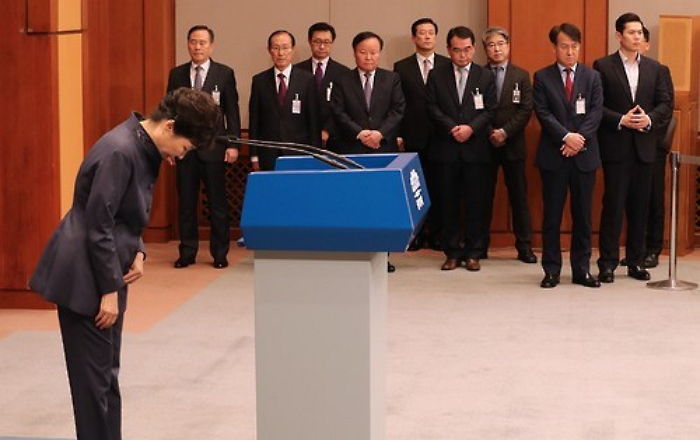
President Park Geun-hye issues a public apology

President Park Geun-hye issues a public apology on October 25, 2016. (source)

President Park Geun-hye is deep trouble. The stories have been out for a few days now, and even the English-language papers have caught on. Park’s confidant has been running a massive slush fund, as she extorted more than $70 million from Korea’s largest corporations. The confidant was receiving confidential policy briefings and draft presidential speeches–all on a totally unencrypted computer. The confidant rigged the college admission process so that her daughter, not known to be sharpest tool in the shed, would be admitted into the prestigious Ewha Womans University. That last bit turned out to be the first step toward the president’s ruin, as Ewha students’ protest over that preferential treatment developed into the larger investigation about the relationship between Park and her confidant, Choi Soon-sil.

But the English language coverage of this scandal is missing something. The newspapers do have most of the facts, which they recount diligently. But they fail to fully account for the Korean public’s stunned disbelief. Although the scale of the corruption here is significant, Koreans have seen much, much worse. Not long ago, Korean people have seen Chun Doo-hwan, the former president/dictator, made off with nearly $1 billion, and this was back in the mid-1980s when the money was worth more than $4 billion in today’s dollars. Even the democratically elected presidents of Korea–every single one of them–suffered from corruption charges. Lee Myung-bak, the immediate predecessor to Park, saw his older brother (himself a National Assemblyman) go to prison over bribery. Lee’s controversial Four Rivers Project, which cost nearly $20 billion, was widely seen as a massive graft project to push government funding to his cronies who were operating construction companies.

For better or worse (mostly worse,) Korean people have come to expect corruption from their presidents. So why is this one by Park Geun-hye causing such a strong reaction? It is not because Korean people discovered that Park was corrupt; it is because they discovered Park was irrationally corrupt. Koreans are not being dismayed at the scale of the corruption; they are shocked to see what the scale of the corruption signifies.

The “Rasputin”

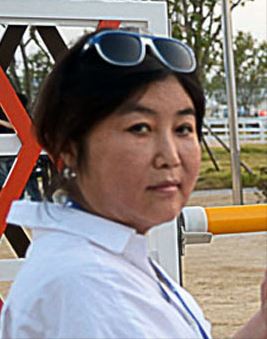
Choi Soon-sil [최순실]

Choi Soon-sil [최순실] (source)

Park Geun-hye’s corruption scandal revolves around a central question: why would the president risk her administration for Choi Soon-sil? In fact, one of Park’s selling points as the presidential candidate was that she was less likely to be corrupt because she had no family. Her parents–former dictator Park Chung-hee and his wife Yuk Yeong-su–were dead, and she was estranged from her sister and brother. This argument had a modicum of plausibility, since all the previous president’s corruption involved their family in some way. (Kim Young-sam and Kim Dae-jung had issues with their sons; Roh Moo-hyun and Lee Myung-bak, their brothers.)

But the lack of family did not stop Park Geun-hye from being corrupt, because she apparently had to give money to Choi Soon-sil. But why did Park Geun-hye, the president, even bother with Choi Soon-sil, a nobody? To answer this question, we must look back into modern Korean history to trace the relationship between Park and Choi.

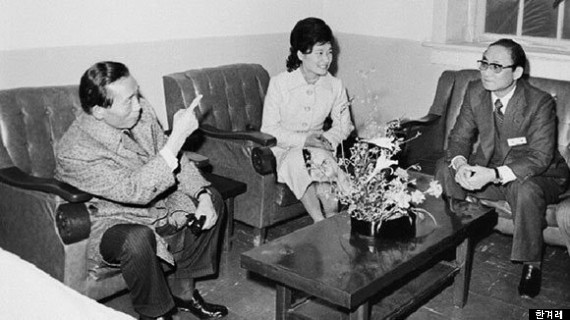
Choi Tae-min (right) meets with Park Chung-hee (left) and Park Geun-hye (center)

Choi Tae-min (right) meets with Park Chung-hee (left) and Park Geun-hye (center) (source)

Park Geun-hye met Choi Soon-sil through Choi’s father, Choi Tae-min. The elder Choi, born in 1912, was a pseudo-Christian cult leader. He started his adult life as a policeman and soldier, and at one point he worked at a small newspaper and a soap factory. By 1970s, Choi was fully engaged in the occupation for which he would be known: being a cult leader, claiming to heal people. Choi called himself a pastor, but he never attended a seminary.

Choi Tae-min met Park Geun-hye for the first time in 1975, when Park was 23. Park Geun-hye had just lost her mother, who was assassinated by a North Korean spy. (The spy was aiming for Park’s father, the dictator Park Chung-hee, but missed and killed the first lady instead.) Shortly after the assassination, the elder Choi sent several letters to Park Geun-hye, claiming that the soul of Park’s mother visited him, and Park could hear from her mother through him. Park invited Choi Tae-min to the presidential residence, and the elder Choi told her there that Park’s mother did not truly die, but merely moved out of the way to open the path for Park Geun-hye. This was the beginning of the unholy relationship between Park Geun-hye and Choi’s family, which included Choi Tae-min’s daughter Soon-sil.

Once the elder Choi won Park Geun-hye’s confidence, he leveraged the relationship to amass a fortune. Choi set up a number of foundations, with Park Geun-hye as the nominal head, and peddled influence. The influence-peddling and bribery became so severe that the dictator Park Chung-hee summoned Choi Tae-min to personally interrogate him. In the interrogation session and thereafter, Park Geun-hye would fiercely defend Choi, her spiritual guide and connection to her dead mother. In a Wikileaks cable from 2007 when Park Geun-hye first ran for president, the U.S. Ambassador for Korea noted: “Rumors are rife that the late pastor had complete control over Park’s body and soul during her formative years and that his children accumulated enormous wealth as a result.”

Choi Tae-min’s high times ended on October 26, 1979, when his patron lost her father in another assassination. (Fittingly, Park Geun-hye’s own downfall began around October 26 of this year.) The assassin Kim Jae-gyu, then-head of the Korean Central Intelligence Agency, said one of the reasons why he decided to assassinate his boss was because of the toxic relationship between Choi Tae-min and Park Geun-hye. Although Park Chung-hee was fully aware of Choi Tae-min’s grafting, the elder Park let it continue for the sake of his daughter. Kim believed that this was another indication that Park Chung-hee was losing his marbles.

For the next decade, Park Geun-hye and Choi Tae-min were removed from politics. The assassination of Park Chung-hee led to another round of murderous dictatorship, this time by Chun Doo-hwan, then finally democratization in 1987. During that time, Park operated several charitable foundations, which were in reality no more than private slush funds made up of the money that Choi grifted during her father’s reign. Park Geun-hye became so dependent on Choi Tae-min that she would be estranged from her remaining family, her sister Park Geun-ryeong and her brother Park Ji-man. In 1990, Park’s siblings went so far as to petition then-president Roh Tae-woo that their sister be “rescued” from Choi Tae-min’s control.

Choi Tae-min died in 1994, at which point Park Geun-hye’s confidence moved to Choi’s daughter, Soon-sil. Park entered politics in 1997, winning her first election as an Assemblywoman in 1998. She would prove to be a competent politician, earning the nickname “Queen of Elections.” She lost in the presidential primaries to Lee Myung-bak in 2007, but came back strong to win the nomination and eventually the presidency in 2012. Although Park’s relationship with the Choi family briefly became an issue during her two presidential runs, she dismissed them as baseless rumors, claiming that neither Choi Tae-min nor Choi Soon-sil was involved in her works as a politician.

As it turned out, Choi Soon-sil owned Park Geun-hye just as much as her father did. Peddling the presidential influence, Choi extorted tens of millions of dollars from Korea’s largest corporations. When they found a small and profitable company, Choi’s cronies would straight-up steal it, threatening the owner of the company with the company’s destruction and personal harm. More importantly, Choi effectively controlled the presidential power. Every day, Choi would receive a huge stack of policy briefs from the presidential residence to discuss with her inner circle–an illustrious group that included Choi’s gigolo (no, really) and a K-pop music video director (I’m serious.) Choi would receive ultra-confidential information detailing secret meetings between South and North Korean military authorities. Choi would receive in advance the budget proposal of more than $150 million for the Ministry of Culture, Sports, and Tourism, and distributed them to her friends’ projects. Choi went around saying North Korea would collapse by 2017 according to the spirits that spoke to her, and the Park Geun-hey administration may have set its North Korea policy based on this claim.

For years, Park’s aides complained about the mysterious off-line person to whom the president would send her draft speeches–when the drafts returned, the professionally written speeches were turned into gibberish. We now know that one of Choi Soon-sil’s favorite activities was to give comments on the presidential speeches. Even the famous Dresden speech, in which Park Geun-hye outlined her administration’s North Korea policy, had a number of markups from Choi Soon-sil. The aides who dug too deep into the relationship between Park and Choi were dismissed and replaced with those close to Choi, to a point that Choi’s personal trainer became a presidential aide. No, really. I wish I were joking. 

The Reckoning

Choi Soon-sil's selfie from the recovered Galaxy Tab

Choi Soon-sil’s selfie from the recovered Galaxy Tab (source)

It is entirely fitting that this sordid affair began unraveling because of a preferential treatment that Choi’s daughter received in her college admission. If there is one thing that Koreans cared more than their lives, it is their (and their children’s) college degree. As the heat rose against Choi and her daughter, they hightailed to Germany where they owned a horse farm.

The major breakthrough occurred on October 24, when a cable TV network JTBC discovered a Galaxy Tab belonging to Choi Soon-sil in the office that she abandoned. The tablet was the Pandora’s Box–it had the presidential speeches with Choi’s markups, presidential briefs for cabinet meetings, appointment information for presidential aides, chat messages with presidential aides, the president’s vacation schedule, draft designs for commemorative stamps featuring the president, and much, much more. The discovery of the tablet was worthy of “World’s Dumbest Criminals”–the tablet was simply left behind in Choi’s office with no encryption, and the files were available for anyone to open. And just in case Choi Soon-sil denied ownership of the tablet, its image gallery contained her selfie.

The next day, the president attempted to stem the tide by issuing a public apology, in which she said Choi was someone who “helped during [her] difficult past.” Although Park admitted that Choi had reviewed the draft speeches, she said Choi only conveyed her personal impressions, and at any rate stopped shortly after her presidential office was formed. The ensuing tsunami of revelations showed immediately that the president was lying; one of Choi’s cronies said Choi was receiving presidential briefing as recently as earlier this year. The president’s approval rating plummeted to around 17 percent, with more than 40 percent of the respondents demanding resignation or impeachment. Even conservative newspapers like Chosun Ilbo, which has been reliably in Park’s corner throughout her administration, has issued daily editorials demanding the Prime Minister and the entire cabinet to resign.

Meanwhile, Korean people’s collective heads exploded. As discussed earlier, it takes quite a bit for Korean politics to shock the Korean people. Having survived a particular tumultuous modern democratic history, Korean people may be the world’s most cynical consumers of politics. But this. Even the most cynical Koreans were not ready for this.

On some level, there is a tiny bit of perverse relief, as all the bizarre actions of Park Geun-hye administration suddenly began to make sense. Why did the president only hold just three press conferences in the first four years of her administration? Why does the president always speak in convoluted sentences that make no sense? Why did the president fly out of handle and sued a Japanese journalist who claimed that she was with Choi Soon-sil’s husband while the ferry Sewol was sinking in 2014, drowning 300 school children? Why did the ruling party randomly host a shamanistic ritual in the halls of the National AssemblyOhhhh, the relief went. Now it all makes sense.

But this brief relief soon gave way to the terrifying realization: actually, it does not make sense. None of this makes any sense.

In an ordinary case of political corruption, the politician is in it for himself. At most, the politician is doing it for his family, or other rich people who may end up helping him later. Obviously, corruption is bad. But this type of self-interested corruption at least gives some measure of predictability. We all know what self-interest looks like. Even though we would prefer that our politicians are not corrupt, at least we know how corrupt politicians behave.

But not with Park Geun-hye. Her corruption was not self-interested at all. If anything, her corruption was self-sacrificing in favor of Choi Soon-sil. Among the numerous revelations, I personally found this the most pathetic: Park Geun-hye gave Choi a sizable budget to purchase the presidential wardrobe, and Choi embezzled most of it. Instead of purchasing the clothes that befitted a head of state, Choi outfitted Park Geun-hye with crappy clothes that she had her cronies made with subpar material. There is a video of Choi’s staff smoking and drinking while eating fried chicken, right next to the suit meant for Park Geun-hye. At one point, one of the staffs handled the suit without even wiping chicken grease from his hands, while breathing smoke onto the clothes. Park Geun-hye would wear this suit on her presidential visit with Xi Jinping. For accessories, Choi gave Park the cheap leather purses and clutches that her gigolo designed. This could not have possibly escaped Park’s notice. Even assuming the unlikely possibility Park Geun-hye might not have had the discernment to know firsthand (unlikely because she grew up in the lap of luxury,) the obvious cheapness of Park’s clothes and bags even made the news. Yet nothing came of it. Choi Soon-sil dressed Park Geun-hye liked an unwanted doll, and Park, the president of the country, did not care.

Even in her apology, Park Geun-hye showed that she still might be under Choi Soon-sil’s hold. What would a self-interested politician would do, if the corruption of one of his cronies was revealed? The politician would sell the crony down the river, denying up and down that he ever knew or interacted with the crony. Such denial would be cowardly and dishonest, but at least it is predictable. But not with Park Geun-hye. She stood in front of the whole country and admitted that Choi Soon-sil fixed her speeches. Instead of cutting ties with her, Park reaffirmed that Choi was an old friend who helped her during difficult times.

This is utterly irrational. Rational people can expect that a corrupt politician may steal money for himself. They can even expect that he may steal for his family. But no one can expect that a corrupt politician would steal money for a daughter of a fucking psychic who claimed to speak with her dead mother. No one, not even the most cynical Korean, expects that the president would refuse to cut ties with Choi Soon-sil, a woman with no discernible talent other than manipulating the president and humiliating her in the process. Koreans may expect that the president would be corrupt, but they never could have expected that the president might be feeble in her mind.

In the Tyson Zone

Sports columnist Bill Simmons coined the term “Tyson Zone,” in which nothing you hear about a particular celebrity can possibly surprise you. Did you hear that Mike Tyson urinated on a police officer? Of course he did! Did you hear that Mike Tyson is attempting to breed unicorns? Of course he is! Given what you already know about Mike Tyson, none you hear about Mike Tyson could possibly surprise you.

With Choi Soon-sil-gate, Park Geun-hye put the entire country into the Tyson Zone. Every insane rumor about the president–the kind that you would see from some remote corner of the internet and laugh off–is now fair game. For years, there have been rumors that the name of Park’s political party, the Saenuri Party, is a code name for a cult named shincheonji. Well, why not? We already know that Choi Soon-sil was the one who actually produced Park’s inauguration, which featured numerous little multi-colored bags that are used for shamanistic rituals. Would it really surprise you Park Geun-hye named her party after a cult? Did you hear that Choi Soon-sil may have had a hidden son who worked at the presidential residence? Well, why not? We already know Choi made her personal trainer into a presidential aide–what’s another hidden son?

This much sounds like a joke, but it can easily take a terrifying turn. There has been much speculation about the “missing seven hours,” where the president’s whereabouts were completely unknown for seven hours in 2014 during the Sewol ferry disaster. Rumors are now running rampant that Park Geun-hye was attending a memorial shamanistic ritual for Choi Tae-min, who passed away 20 years on the day of the ferry disaster. The more lurid version of the rumor says that Park’s government actually caused the Sewol sinking, to offer human sacrifice for the dead cult leader. As ridiculous as these rumors are, Park Geun-hye’s behavior forces even reasonable people to think, maybe.

Even the way forward is not entirely clear. Politically, Park Geun-hye is finished, although it is unlikely that she would resign or be impeached. She would not resign because she fundamentally lacks the capacity to assess the reality around her. The opposition would not bother with the impeachment–they would prefer to let the administration bleed with non-stop investigation, until the presidential election comes next year.

But remember that we are now in the Tyson Zone, where everything is fair game. Choi Soon-sil is still on the run, and she still may be able to get in touch with the president. Even a politically finished president has a few remaining options to short-circuit the political process, and this president does not seem to have the instinct for self-preservation when it comes to Choi. I don’t want to actually write out what Park Geun-hye might do, because the mere thought of them sends chills down my spine. But I cannot get those thoughts out of my head, because they are no longer ridiculous. My worst nightmares for Korea’s democracy are now a realistic possibility. This is the shock that the Korean people are experiencing now.