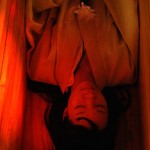
Yang Haegue to represent Korea in Venice

http://www.koreaherald.co.kr/NEWKHSITE/data/html_dir/2008/12/31/200812310026.asp

A series of vulnerable arrangementsInstallation artist Yang Haegue has been chosen to hold a solo presentation in the Korean Pavilion at the 53rd Venice Biennale in Italy next year.

“Yang is one of the most significant Korean artists performing now,” said Joo Eungie, the pavilion commissioner, at the press conference last week at Arts Council Korea. “This is her moment. Through this Venice Biennale, she can get attention and so can Korean contemporary art.”

A new commissioner is designated every year for the Korean Pavilion by Arts Council Korea, and the commissioner selects an artist or a group of artists to present in the Biennale.

Graduating from Seoul National University Fine Arts College, Yang has been showcasing her work more internationally — sharing her time between here and Germany. Critically acclaimed around the world, German newspaper Capital included her as one of the top 100 international installation artists, along with compatriot Lee Bul.

Yang uses sculpture, video and installation to express her sentiments about humanity, history and her private memories.

“I think the similarity between an artist and a philosopher is that they both try to realize something that already exists,” said Yang. “I simply try to express them with my artistic words.”

She has not decided what to exhibit at the Biennale yet, but her former work gives us a few hints.

Electric machines frequently appear in her work. “Asymmetric Equality” which was exhibited in Gallery at REDCAT in Los Angeles last summer, featured theatrical lights connected to sensors on a drum set. If one drummed on the set, different blazing lights moved as an echo of the sound.

An infrared heater warmed the air in her exhibition room from one corner and an air conditioner cooled it from another side. Humidifiers made the space moist.

“It made viewers confront their opposite senses,” explained Joo.

Yang HaegueSimilar substances filled the room in “A Series of Vulnerable Arrangements,” which Yang displayed in Sao Paulo Biennale in 2006.

For those who have followed Yang’s career, “vulnerable” is the word that pops into their head at the mention of her. Yang has used the word very often since 2004 to express sadness, loneliness and melancholy.

“The stronger and more impressive I found my surroundings, the weaker my heart became,” said Yang. “Then this melancholic vulnerability seemed to open small passages where different beings and elements can newly be connected through.”

Yang defines her works as “sentimental communities mobilized by senses.” Sounds complicated? Yang herself admits that her works are indescribable.

“My works are hard to imagine if you don’t actually experience it. You need to breathe it, feel it, and see it using all your senses. You have to be covered from top to toe by the shades and lights of my work to really get it,” said Yang.

Unfortunately, viewers will not be able to see Yang’s usual use of dramatic lights at Venice because the pavilion there is very bright.

“We are eagerly discussing what to do. Everything I do from now will be melded in it. I can dare say that I am enough to take this big responsibility. I really want to do my best,” said Yang.

Venice Biennale will run from June 22 to Nov. 22 next year.

By Park Min-young

(claire@heraldm.com)

2008.12.31

Art industry suffers serious downfall

http://www.koreaherald.co.kr/NEWKHSITE/data/html_dir/2008/12/29/200812290041.asp

Dreadful flames swallowed Namdaemun, Korea’s 600-year-old National Treasure No. 1, on Feb. 10, breaking the hearts of Koreans. As if in mourning over the loss of Korea’s most artistic cultural asset, the Korean art industry itself was at a loss all year long.

Already strained by various scandals, the industry suffered from the global economic crisis and nearly hit rock bottom. It never managed to bounce back, but instead fell deeper into a slump, weighed down by an unhelpful government.

The year began with a wobbly start as Shin Jeong-ah, the former art professor and curator who forged her academic credentials and embezzled gallery money, was sentenced to a year and six months in prison in April.

A number of art forgery scandals followed, including the one over Park Soo-keun’s painting “A Wash Place.” It was sold for a record 4.52 billion won ($3.4 million) last May but was soon entangled in forgery controversies.

It went through numerous evaluations, but it is still not certain whether it is authentic or not. It is currently being reinspected by the Seoul National University and it is apparent that the controversy will continue, since the person in charge at the university was recently disciplined.

Other pieces by famous artists such as Kwon Ok-yeon and Do Sang-bok were put up at auction but were exposed as fake by the artists themselves or their surviving family. The auctions were canceled at the last minute.

Making it harder for the art industry to find tranquility after these scandals quieted down were vacancies of the top of the major art galleries and art councils.

photo3

photo4

Hong Ra-hee, the former head of the Samsung Museum of Art, Leeum and who was selected as the most powerful figure in Korean art industry, announced that she would no longer participate in any of Leeum’s business when she resigned earlier this year.

Her resignation was the result of the accusation that she used some of Samsung’s slush funds to supplement her collection of paintings. Roy Lichtenstein’s painting, “Happy Tears,” was at the center of the controversy.

Since her resignation, art fans have been unable to see the museum’s high-quality special exhibitions. With Korea’s top private gallery silent, the art industry is busy searching for another target buyer.

Kim Yun-su, the former director of the National Museum of Contemporary Arts, was dismissed in November, accused of buying Marcel Duchamp’s installation art “La Boite en Valise” for an inappropriately high 600 million won without going through proper purchasing procedures.

Kim Jeong-heon, former chairman of the Arts Council Korea, was also released from the office in December for a similar reason, the misuse of the council’s budget. He was blamed for an investment loss of 5.4 billion won, which allegedly came in the form of regulations violations.

However, the culture minister Yu In-chon had announced earlier this year that it was only natural for both Kims to step down, mentioning that all officials appointed under the left-leaning Roh Moo-hyun administration should quit their posts.

The art industry seems to be one of the industries most affected by the world economic crisis, especially compared to last year, the industry’s heyday. Gallery insiders say with a big sigh that this year was the worst in sales ever.

The art auction market, which was worth over 192.6 billion won last year, dropped over 40 percent, to 114.9 billion won. More than 80 percent of the bid was successful last year but this year, only 50 percent managed to sell. New auction companies such as D auction and Open auction are delaying the opening of their businesses.

It is the same situation with biennales and art fairs. Many opened this year, including Gwangju Biennale, Busan Biennale, Daegu Photo Biennale and Korea International Art Fair.

In size and quality, they left nothing to be desired. Most of them succeeded in attracting their most visitors ever, as 360 thousand visited Gwangju and 160 visited Busan during the period.

KIAF was bigger than last year, with about 1,500 artists from 20 countries presenting approximately 6,000 works. Gwangju Biennale succeeded in overcoming the void left by Shin Jeong-ah’s removal with a unique theme of “no theme at all,” under the name “Annual Report,” led by Okwui Enwezor, the art director.

The fairs, however, did not result in good sales. More than 61 thousand visitors entered the KIAF this year, but the sales dropped from 17.5 billion won last year to 14 billion won.

To make matters worse for the art industry, the bill of imposing capital gains tax on art pieces passed the plenary session of the National Assembly on Dec. 13. Starting from 2011, art pieces that cost more than 60 million won will be taxable. Works of Korean artists are excluded.

But some experts say that this is the right time to make the art market transparent and sort out its dealing system, which had regularly seen giant bubbles of overpriced artworks.

But the controversy over the bill is likely to continue next year, as art galleries and organizations, which closed down for days in November to protest the government’s movement, are still against the bill.

They worry that the real-name dealings system will make the art market shrink even more, considering how art collectors usually do not open to the public the specifics of the dealings. They also question how exactly the government will be able to estimate the prices of each art piece.

A light of hope does shine on the troubled art industry, though. Some auction companies and art galleries are paving their way into the world market, trying to survive through the depression.

Seoul Auction and K auction, the top two auction companies in Korea advanced into Hong Kong and Macao this year and are putting up a good fight. Seoul Auction sold Lichtenstein’s “Still Life with Stretcher, Mirror, Bowl of Fruit” at 9.3 billion won in Hong Kong.

Arario Gallery, Gallery Hyundai, and PKM gallery opened in China, Arario Gallery and Gana Art Gallery in New York, and Pyo Gallery in Los Angeles in the United States.

By Park Min-young


(claire@heraldm.com)


2008.12.29

Drama market gets globalized, theme-driven

http://www.koreaherald.co.kr/NEWKHSITE/data/html_dir/2008/12/26/200812260042.asp

With the new year less than a week away, the drama market merits a moment of reflection. The year 2008 proved to be a trying time for Korean dramas.

Pummeled by an economic crisis and competition from hit American and Japanese series, the domestic market cut down on the number of miniseries it aired in November. Yet despite cutbacks, a few stellar pieces stood out this year that, along with a dramatic increase in theme-driven dramas, softened the blow.

Here is a recap of the highs and lows of 2008, along with a glimpse into 2009.

Drama recession

Around November, KBS, MBC and SBS responded to the economic downturn by slashing their drama budget. KBS discontinued their 7:40 p.m. daily KBS 2 TV dramas, MBC their special weekend dramas and SBS their Friday premium dramas as part of their autumn program reforms.

Various factors contributed to the reduction, including an increase in wages for celebrities and screenwriters, which upped production costs, along with a decrease in advertising.

All three major broadcasting networks are also tightening their 2009 drama budgets and looking for ways to bring down production costs. This includes employing rookie actors and cutting back on overseas filming.

Production companies were also hit hard by the crisis, posting deficits for 2008. JS Pictures, the production company behind SBS’ popular series “Sikgaek,” was in the red, according to a representative of the company.

“Actors’ wages may have been one of the causes for the deficit,” a JS Pictures representative explained. “There are a lot of plans for dramas right now, but everyone is hesitant to start production. Everyone is in a bit of a slump.”

photo5

Chorokbaem Media, the production company behind SBS’ hit drama “Iljimae,” also posted a deficit, stated a representative.

“Accounting-wise we were in the red this year,” explained the Chorokbaem Media representative.

“But that was because of last year’s ‘Lobbyist.’ Dramas that aired this year like ‘Iljimae’ and KBS’ ‘The Land of the Wind’ have been profitable thus far,” he added, maintaining a positive outlook for 2009.

For state-run broadcaster KBS, however, a change in chiefs may make 2009 a rocky year. On Aug. 26, President Lee Myung-bak appointed Lee Byung-soon the new chief of KBS, following the dismissal of former KBS chief Jung Yun-joo.

The best and the chic

Despite the economic crisis, 2008 proved to be an exciting year for the drama market. A movement towards theme-driven miniseries steered the herd away from the classic melodramatic formula. Broadcaster SBS led the trend with “On Air,” “Sikgaek,” “Tazza,” “The Painter of Wind” and their brand new “Terroir.”

The gamble proved to be a success for the drama-about-a-drama “On Air” and the gourmet series “Sikgaek.” MBC’s medical series “New Heart” and its musically-inclined “Beethoven Virus” also struck gold, serving as testimony to the newfound popularity of themed dramas.

MBC’s sweeping 50-episode epic “East of Eden” and their historical “Isan,” however, highlighted the continuing power of the tried-and-tested. And SBS’ hit “Iljimae” walked the middle road with its modern take on historical romance.

Yet, one stellar drama served as a beacon of hope for the future of Korean dramas. Though it failed to garner high viewer ratings, KBS’ “Worlds Within” sported all the trappings of a top notch work: a supremely talented cast, director and scriptwriter.

Like “On Air,” “Worlds Within” was a miniseries that explored the drama-making process and employed the star power of a high profile cast, but the chemistry between celebrities Song Hye-kyo and Hyun Bin turned the series into a poignant and riveting tale, while skilled supporting actors – Uhm Ki-joon, Bae Jong-ok and Kim Yeo-jin – added depth and color.

But it was the collaborative fireworks produced by directing and writing duo Pyo Min-soo and Noh Hee-kyung that took “Worlds Within” to the next level. “Full House” director Pyo utilized savvy collaged cuts of various scenes on a black background to show characters in different locations from various points-of-view simultaneously, while “Goodbye Solo” screenwriter Noh Hee-kyung spiced up her dialogue with the harsh and pulpy talk of the gritty drama production room, while exercising just the right amount of control in the area of romance and friendship.

Dramas of 2009

Female warriors and old romances will be lighting up the small screen in 2009. KBS’ “Iron Empress” and SBS’ “Ja Myung Go” will be turning the spotlight on the female fighter, while MBC’s “I Love You” and KBS’ “Again My Love” will explore relationships between the elderly and the middle-aged.

Production company Group Eight looks set to mix things up with their upcoming “Tamna is the Island.” Set on 17th century Jeju Island, the plot revolves around a girl diver, a British native and an aristocrat. Add to that four writers and the use of a French actor for an entirely new take on historical romance.

Media entertainment group On-Media will be upping the ante by starting a channel devoted to American dramas. On-Media’s new channel, OCN Series, will bring in hit shows like CSI, Desperate Housewives and Sex and the City. The channel goes on air on Jan. 1.

By Jean Oh

(oh_jean@heraldm.com)

2008.12.26

Ten Culture Trends of 2008

The late actress Choi Jin-silhttp://www.koreatimes.co.kr/www/news/art/2008/12/201_36567.html
By Han Sang-hee
Staff Reporter

1. The Death of Celebrities in 2008

The late actor Ahn Jae-hwanThe suicide death of actor Ahn Jae-hwan because his debt shocked the nation. Then, the suicide death of Korea’s commercial queen and sweetheart, Choi Jin-sil, friend to Ahn and his wife/comedian Jung Seon-hee, jolted the nation. Choi’s death hit the nation hard, with fellow celebrities following suit, including transsexual actress Jang Chae-won, model Kim Ji-hoo, and vocal group M Street’s leader Lee Seo-hyun.

Many stars passed away, leaving the entertainment industry and its fans grieving.

The first celebrity to leave fans was Kim Chang-ik, youngest member of the group Sanulrim. He was followed by famed composer Lee Young-hun, who died in February after suffering from colon cancer. In April, Turtleman from the pop group “Turtles” died from a heart attack, while Kim Min-soo, member of the pop group Monday Kiz, passed away after being involved in a motorcycle accident.

Model Ion also died in a motorcycle accident. Most recently, actor Park Gwang-jeong passed away after suffering from lung cancer.

2. The Popularity in “Real” Reality Shows

Infinity Challenge

This year welcomed various reality shows, some new and some simply upgraded. The key factor of this year’s reality programs is that the shows represent raw realism. MBC’s “Infinity Challenge” showed its group practicing for a Latin dance competition and also a nationwide aerobic competition. KBS’ “One Day Two Nights” presented a celebrity group visiting villages and carrying out tasks and games along the way. MBC’s “We’ve Got Married” put popular celebrity couples in “marriages” and showed them living in the same house, and spending time together like other married couples. SBS joined in the fun with “The Family is Out”, which brought a number of celebrities to the country picking fruits and vegetables, working in the fields and cooking things for themselves.

Family is Out

3. The Comeback of Big Stars and Rise of Idol Groups

Seo Tai-jiThe pop scene this year was busy with the return of big stars as well as the rise of hip pop idol groups. Singer Kim Gun-mo appeared with his new album, which was made with composer Kim Chang-wan for the first time since their split 13 years ago. Ballad singer Shin Seung-hun also returned after holding concerts in Japan. Singers Kim Jong-kook and Jo Sung-mo returned after finishing their military service, while “JYP” Park Jin-young, Rain and even Seo Tai-ji returned to their loyal fans. Female singers were also strong, with Baek Ji-young and Lee Soo-young gracing the stage with new tunes.

Big BangThe rise of the idol groups — Big Bang, Wonder Girls, Girls’ Generation and newcomer SHINee — wowed fans with distinctive styles and catchy songs. Individual activities that group members pursued were also interesting. Tae-yang from Big Bang released his own album, while Yu-na from Girls’ Generation was tapped for the main role in a KBS drama.

4. Big Classical Artists Visit Seoul

Simon RattleNumerous classical stars visited Korea to the delight of fans.

The Vienna Boys Choir started 2008 with their angelic voices, followed by the London Philharmonic Orchestra as led by conductor Vladmir Jurowski, cellist Pieter Wispelwey and pianist Peter Jablonski.

Crossover tenor Andrea Bocelli visited Korea the first time in eight years last April, wowing fans with his charms and charisma. Pianist Martha Argerich and maestro conductor Chung Myung-whun dazzled fans with their joint performance. Young maestro Yannick Nezet-Seguin and pianist Li Yundi graced fans with their tunes. Finnish conductor Esa Pekka Salonen performed with the Los Angeles Philharmonic Orchestra, Sir Simon Rattle with the Berlin Philharmonic and Gustavo Dudamel with the Simon Bolivar Youth Orchestra of Venezuela.

5. Stars Moving Out to Hollywood

RainSeveral celebrities knocked on the U.S. market with their albums and films.

Singers BoA and Se7en are currently stationed in the U.S., appearing on television, Web sites and newspapers. They are striving to captivate American fans. BoA is planning to release her official album next year, while Se7en performed at a concert in Seattle and will release his album early next year.

BoARain has been one of the busiest stars both here and in the U.S. After his small role in the Wachowski brothers’ “Speed Racer,” he was tapped for the main role in the upcoming movie “Ninja Assassin”, slated for release next year. Jang Dong-gun and Lee Byung-hun will separately appear in the U.S. movies “Laundry Warrior” and “G.I.Joe: Rise of Cobra”.

Female actors have also jumped into the Hollywood stream. Jun Ji-hyun appeared in “Blood: The Last Vampire” and Bae Seul-gi joined the cast of a global project film called “Finale.” Han Chae-yong will fly to New Zealand next year to shoot the movie “Soul Mates,” a joint Korean-New Zealand movie.

6. Various Plots in Local Dramas

Dramas of 2008 saw many experiments.

Many drama-makers looked for storylines within their own territory, touching on the lives of people in the broadcast business. “On-air” became popular for dealing with the life of a stubborn celebrity and her manager. Kim Ha-neul played a cocky actress, bringing herself once again to the spotlight for her trendy fashion style and good acting skills.

Worlds Within“Worlds Within” also made headlines with its catchy plot, about the struggling lives of actors and drama producers. Its two main characters were played by Song Hye-kyo and Hyun Bin. “Spotlight” delved into the lives of news reporters, yet failed to gain popularity despite famous actors like Son Ye-jin and Ji Jin-hee. Classical and culinary plots were also popular this year. The hit drama “Beethoven Virus” touched on the orchestral journeys of musicians as well as a stubborn maestro conductor. “Sikgaek” offered simple culinary dishes and recipes around the nation.

Last but not least, art fans had the chance to enjoy “The Painter of Wind,” which told the story of two of Korea’s most famous artists back in the Joseon Kingdom (1392-1910).

7. Forgery Scandals Hit Local Art Scene

The art scene in 2008 was smeared with forgery scandals regarding works by some of the nation’s most famous artists.

The late Park Soo-keun’s painting “A Wash Place” made headlines when it was sold at an auction for the highest price ever, 4.52 billion won. But its authenticity was soon questioned as a local art magazine pointed out its differences from the original as seen in Park’s Collection book.

The Korean Art Appraisal Association carried out an appraisal due to Seoul Auction’s request, clarifying that the work was the original. Despite the clarification, Park’s famous painting continued to spark controversy. It was sent once again for appraisal by other appraisal organizations here and in Tokyo, only to bring yet again the same result.

8. Idol Groups Leading the Local Fashion Scene

Fashion advice in 2008 was smart and simple: follow your favorite stars. Soaring idol groups did not only affect the pop music industry, but also the fashion scene. Young fans wearing clothes similar to those of their favorite singers were nothing new. But this year fans and stars alike brought trend after trend all through the year.

Male groups dominated the fashion scene with their tight skinny jeans and high-top shoes. Big Bang was one of the most popular groups this year, and the members successfully brought out their personalities with distinctive hairstyles, both baggy and skinny pants, and even makeup. SHINee was new to the pop scene, but their simple and easy-to-follow looks captivated fans, complete with colorful shirts, jackets, high-top sneakers, and tightly fitted jeans.

The Wonder Girls and Lee Hyo-ri were the center of attention wherever they went, with their chic and glamorous styles. The five-girl group brought retro back to the fashion scene, with colorful stockings and simply dresses. Lee expressed her style with sexy, tight fitted leather pants, hats and leggings.

9. Sluggish Movie Market Ever

For movie fans, this year was not fruitful. The market share in local movies was the lowest since 2001, a staggering 42 percent as compared to the 52.3 percent last year. 113 films were released nationwide, but only seven exceeded an audience of two million.

Foreign movie studios like Warner Brother and Sony Pictures also shut down their operations, citing sluggish sales and the downloading that prevented viewers from buying DVDs at full price.

Despite stagnation, there were still catchy movies that brought fans to theaters, such as “The Chaser” starring Ha Jung-woo and Kim Yun-seok, and “The Good, the Bad, the Weird” starring top male stars Jung Woo-sung, Lee Byeng-hun and Song Kang-ho.

10. Stars Rush to Stage

The local theater industry is enjoying a boom of popularity despite the economic recession. This is mainly due to its star-studded marketing strategy.

Star power apparently led to the success of musicals and plays this year. Top singers such as Choi Sung-hee, better known as Bada, Ock Ju-hyun, Park Ji-yoon, Dae-sung from the boy band Big Bang, and King-in and Hee-chul from Super Junior, rushed to musicals, pushing up ticket sales.

Also, celebrity movie stars such as Ko Soo, Hwang Jung-min, Choi Hwa-jung and Han Chae-young returned to the stage in various big-name plays as part of “Yeongeuk Yeoljeon 2” as programmed by veteran actor Cho Jae-hyun.

The strategy of casting celebrities worked to attract young audience members. But some critics said that it was only a temporary measure, which merely pursued commercial success without theatrical artistry.

sanghee@koreatimes.co.kr

Korea’s Promotion Overseas Mismanaged

http://www.koreatimes.co.kr/www/news/special/2008/10/260_32613.html
david-kilburn1By David Kilburn
Korea Times, 13 October 2008

The attraction of transforming a country into a brand is easy to understand. Brands add value, both for their owners and their consumers.

According to U.S. brand expert John Gerzema, author of The Brand Bubble, brand value now accounts for about 30 percent of the market capitalization of companies on the S&P 500 index, up from 5 percent 30 years ago.

Today, the 250 most valuable global brands are worth $2.2 trillion, more than the GDP of Italy.

Google’s brand value makes up 50 percent of its market capitalization. PepsiCo shows a tangible book value of $9.8 billion against a market value of $108 billion, showing how much investors bank on the value of brands rather than the company’s more tangible assets.

Taking the S&P ratio as a guide, a government might assume that transforming their country into a brand might add 50 percent to the value of their economy.

However, this goal is more difficult to achieve for countries than for consumer products. The differences are fundamental. Product brand managers can choose the name, packaging, pricing, decide exactly what to pour into the package, how and where to distribute it. They also change any or all of these variables and take their brand to consumers around the world.

Governments lack this degree of control. Geography, climate, language, population, history and many other factors are unchangeable. While a consumer brand might appeal just to one group of people, a country involves everyone.

Countries are multi-dimensional and far more complex than products. Copying an approach developed for consumer goods is no guarantee of success.

The complexity of country branding is revealed in studies by the U.S. consultancy FutureBrand which publishes an annual report (http://www.countrybrandindex.com) covering the top country brands, based on quantitative research among 2,500 frequent international travellers, plus data from other sources.

FutureBrand’s 2007 report ranked countries across a wide range of criteria: Authenticity, History, Art & Culture, Resort/Lodging Options, Families, Outdoor Activities/Sports, Beach, Natural Beauty, Environmental, Rest & Relaxation, Safety, Rising Star, Value for Money, Fine Dining, Shopping, Nightlife, Friendly Locals, Nice to Live In, Ideal for Business, Easiest To Do Business In, Easiest to Extend A Business Trip In, Conferences.

Based on scores across these wide ranging criteria, the top country brands in 2007 were, in rank order: Australia, USA, UK, France, Italy, Canada, Spain, New Zealand, Greece, and Japan.

Across all FutureBrand’s categories, Korea only appeared once among the top 10. It ranked 10th for shopping. This is disappointing considering that Korea is home to eleven of UNESCO’s world heritage sites, and has three intangible cultural treasures cited as “Masterpieces of the Heritage of Humanity,” also by UNESCO.

Korea also possesses vast expanses of beautiful unspoilt scenery, and a very distinctive cuisine ? all examples of factors that other countries have successfully exploited. Yet Korea only ranked 21st for history, 31st for Art & Culture and 39th for Authenticity. For natural beauty it ranked 58th, for Fine Dining 45th, and for Resort/Lodging options 53rd. There is only one conclusion: Other countries are more successful in competitively pitching their own benefits to travellers.

However, the news about Brand Korea is not completely bleak. Young & Rubicam’s Brand Asset Valuator has been tracking brands for over a decade.

A recent analysis of trends from 1997-2007, found that Brand Korea has started becoming more approachable to Japanese consumers. It has achieved greater momentum among Thai adults, in such terms as “Prestige,” `Cutting Edge” and “Fashionable.”

Over this same period Brand Korea’s personality for Chinese adults has improved, especially as “Fashionable.” This suggests, unsurprisingly, that different opportunities and problems pose themselves for each country.

Though Singapore was not ranked the first in any of FutureBrand’s categories, it was still ranked among the top 10 on 10 different criteria. Only the United States, Australia, New Zealand, and Canada did better.

Singapore is one of the most successful countries at marketing itself. The rise from a swampy island to iconic brand status began when Singapore Airlines introduced their “Singapore Girl” advertising campaign in 1972.

In those distant days, flights from the Far West to the Far East stopped in Singapore to refuel, with a stopover opportunity for passengers. The Singapore Girl became a metaphor for “Asian values and hospitality” which conveniently projected Singapore itself and helped tourism.

Brand Singapore gradually came into being. By the early 1980’s tourism had become the third most productive sector of Singapore’s economy and contributed 5 percent to GNP. But by 1986, hotel occupancy was falling and the tourism growth rate was also in decline. With typical thoroughness, the Singapore government researched the views of visitors. They found that about 70 percent of tourists came from Asia to see Singapore’s economic miracle, and were not disappointed.

However the 30 percent of tourists from outside Asia were hoping to experience something of the island’s romantic historical image and were disappointed. Why travel half way round the world to see a modern city just like back home?

Since visitors from outside Asia had been tourism’s growth sector, their disappointment discouraged friends from visiting. In a report, the Singapore government’s Tourism Task Force concluded, “In our efforts to build up a modern metropolis, we have removed aspects of our Oriental mystique and charm best symbolized in old buildings.”

Teams studied how other countries preserved historical legacy, especially their old buildings. Demolitions were stopped. Money was poured into the repair and preservation of what little remained of old Singapore.

Care was taken to ensure the historical authenticity of old buildings was retained. Within about six years, the remnants of Old China Town, Little India had been rescued. By 1993, revenues from Tourism had grown to 10.3 percent of Singapore’s GNP.

From a tourist destination, Singapore successfully developed as a logistics hub, an international conference and trade show venue, and a financial centre. This year Formula 1 Sing Tel Singapore Grand Prix became the first floodlit night time race in F1 history. Night time, so that viewers in Europe could watch daytime.

About 30 million TV viewers watched the race in Singapore’s main European markets. A sell-out crowd of over 100,000 watched the race track-side in Singapore. There was a time when a slogan, logo, advertising campaign, and a promotional film were enough to promote a country, but that is history.

Branding is not simply a logo or slogan that changes with each advertising campaign. While many follow this approach, it does not maximize what a country can achieve.

Traditional marketing tools are useful but, according to researchers at Media Edge/CIA, 76 percent of people now rely on what others say versus 15 percent on advertising. 92 percent of consumers now cite word of mouth as the best source for product and brand information, up from 67 percent in 1977.

The direct experience of others carries more weight than advertising campaigns or government pronouncements. In this new world, every visitor to Korea is a potential advocate. Every businessman, journalist, tourist, English teacher, overseas student, and migrant worker will have tales of experience to tell, whether in gatherings such as the World Economic Forum, via the Blogosphere, or simply talking to friends.

The internet facilitates the free flow of information, anecdotes, experience, opinion, and recommendation on a tremendous and growing scale. Review sites such as Digg (http://digg.com) and Reddit (http://www.reddit.com), are now the third-most-common use of the Internet after e-mail and search. Social Networks are increasingly important: if Facebook were a country, it would be the 10th largest, bigger than Japan.

Even consumer brands have been slow to recognize the significance of these changes, but now they are rapidly embracing the internet. One example of what internet strategies can deliver is the story of how the Mexican Tourist Board successfully promoted the Mayan ruins at Chichen Itza to become one of the new Seven Wonders of the World (http://www.new7wonders.com).

The project was devised by their long term PR agency, Burson-Marsteller, which re-created the site in the virtual 3-D world Second Life (http://secondlife.com), giving visitors a chance to experience this ancient civilization. The site drew more than 33,000 visitors on launch day, gained extensive media coverage, and many top PR awards. Chichen-Itza was voted one of seven new wonders in July 2007. The economic benefits were almost immediate and far outweighed the $17,000 spent on Second Life. “Since being named a wonder of the world, the number of visitors to Chichen Itza has increased 75 percent,” said Juan Jose Marti Pacheco, secretary of Tourist Promotion of Yucatan, this February.

The sad conclusion is that Korea’s promotion overseas has been consistently mismanaged and has therefore achieved fewer results than countries that have accurately understood their opportunities and problems, and followed a strategic path to get results.

Who Is David Kilburn?

David Kilburn is from the U.K. He worked in the advertising industry for 20 years and has been a professional journalist in Asia for 25 years.

He has lived in Seoul for 20 years. He is also founder of kahoidong.com, an organization formed to protect the remaining original hanok of Gahoi-dong, and Chairman of 3c World, a social networking project.

Slower pace would help Seoul to grow faster

Anna.Fifield
Financial Times
August 6 2008
http://www.ft.com/cms/s/0/1b22cb0a-63d2-11dd-844f-0000779fd18c.html

In South Korea, there is only one speed: full throttle.

Buildings go up almost overnight, trends pass no sooner than they have arrived and presidents’ approval ratings drop from 70 to 20 per cent in the blink of an eye. One of the first local sayings that foreigners learn is bballi bballi — fast, fast.

When I moved to Seoul four years ago, I was immediately impressed by Koreans’ determination and energy, the two biggest factors behind the country?s transformation from rural backwater to technological powerhouse. As I prepare to leave, I still marvel at this country’s verve. But I cannot help wondering whether South Korea can avoid falling into the kind of economic malaise that has afflicted Japan. The country remains overwhelmingly dependent on goods exports and the service sector is woefully underdeveloped and inefficient. But of all the challenges facing South Korea, there is one, often overlooked, area where reform would bring unparalleled benefits: education.

Devoid of natural resources, Korea?s recourse has been to its human capital. People propelled Korea to where it is today, thanks largely to Park Chung-hee, the former president and a military strongman who directed Koreans to study engineering in particular. One senior Samsung executive this week explained to me that two significant components of the conglomerate’s ‘success DNA’ were its ability to move quickly and the calibre of its engineers. Now, more than ever, human capital will be the deciding factor in how South Korea fares in the future and whether it makes its next transformation, into a knowledge economy.

Koreans perform exceptionally well in international performance rankings for subjects including reading comprehension, maths, science and problem solving, and the proportion of 25-34-year-olds with an upper secondary school education is the highest in the Organisation for Economic Co-operation and Development. Koreans now represent the largest group of international students in American universities.

But they have got there through the most arduous process, driven by the intense social pressure to get into the right school, then the right university, find the right job and meet the right spouse. One friend recounted how when her three-year-old?s kindergarten conducted psychometric testing, the other mothers earnestly jotted down the results, noting whether to push their tots towards law, medicine or finance.

Koreans spend more time at school than students in any other developed country and spend the most money on education (8 per cent of gross domestic product), with private education expenditure double that of the US, the second biggest spender. Bank of Korea data show that families spent more than $12bn (EUR7.7, £6bn) on after-school education last year.

The system rests largely on rote learning and places almost no value on analysis, creative thinking or practical application. High school students who can score 99 per cent in an English test are often unable to hold even a simple conversation, while university students who express a contrary view to their professor simply fail. So intense is the pressure to get good grades that 12-year-olds, after spending all day at school, routinely attend cram school, or hagwon, until midnight.

This obsession with education has contributed to a number of social and economic problems ? from the low fertility rate, partly the result of the cost of putting children through private tuition, to the real estate bubble in southern Seoul, where the best schools and hagwons are located.

It also augurs ill for the future, when South Korea will not need so many workers who can build ships and assemble cars, but will need more and more people who can be innovative, who can develop and apply knowledge. Indeed, despite Korea?s impressive headline performance in test scores, the World Economic Forum ranks the quality of the country?s education system at 60th in the world ? shockingly low for one of the world?s top dozen economies.

Creating a knowledge-based economy will be critical if South Korea is to maintain decent levels of growth — the potential rate is now 5 per cent — and to reach income levels of the world?s most developed countries. One of President Lee Myung-bak’s big pledges is to see Korea’s per capita income double to $40,000 within a decade.

Koreans have already performed remarkably in IT — particularly on the hardware side — but improving the education system would produce workers better equipped to meet the needs of the country?s fast-moving technology industries.

Further growth can be achieved through productivity gains — Korea’s productivity is 60 per cent below the US level. Service sector productivity is only half that of manufacturing, and has been stagnant for almost 15 years. Given the nature of the education system, this can be no coincidence.

Overhauling this system will be incredibly difficult. After all, another of my friends, an enlightened mother who would prefer her 14-year-old to play basketball after school and go to bed before 1am each night, can not even dissuade her son from going to hagwon.

However, for its future prosperity and to retain its economic prowess, Korea would do well to take its foot off the accelerator slightly, take stock and think about using its impressive drive and human capital in more efficient ways. The economy will benefit and the kids will love it.

When death is a reminder to live

By Anna Fifield
Published: July 21 2008
http://www.ft.com/cms/s/0/c8475c5e-574a-11dd-916c-000077b07658.html

Standing in front of a flower-covered altar in a dimly lit room, Baek Kyung-ah is reading out her will at her own funeral. “I can’t believe today is my last day,” she chokes through sobs, her voice barely audible above the solemn music.

“To my husband, knowing that this will be my last time seeing you, I would like to apologise for thinking only about myself and for not being a caring wife. To my parents, just thinking about you makes my eyes teary. I love you,” she cries, before heading off to lie down in a coffin and be “buried”.

Welcome to the new Korean craze of “well-dying”. In a country infatuated with “well-being” – living and eating healthily, even to the point where tobacco-makers offer vitamin-enriched “well-being cigarettes” – training companies are now offering courses on dying a good death.

“Korea has ranked number one in many bad things such as suicide and divorce and cancer rates, so I wanted to run a programme for people to experience death,” says Ko Min-su, a 40-year-old former insurance agent who founded Korea Life Consulting, which offers fake funerals as a way to make people value life.

Korean corporations – from Samsung Electronics and Hyundai Motor to Kyobo Life Insurance and Mirae Asset Management – send their employees on Mr Ko’s courses regularly, partly to encourage them to question their priorities in life and partly as a suicide prevention measure.

The course is now such an integral part of training at Samsung and Kyobo that they have even built their own fake funeral centres. International companies including ING and Allianz have also sent their staff on the courses.

Suicide is a serious problem in South Korea, which has the highest rate of self-inflicted deaths in the developed world, with 24.7 cases per 100,000 people, according to the latest report from the Organisation for Economic Co-operation and Development. The rate has doubled in the last five years.

Experts blame the sharp increase on the sudden changes in society resulting from South Korea’s rapid industrialisation, which has led to cut-throat competitiveness and financial stress. “We have seen a lot of social change over the last 30 or 40 years and people are having a hard time keeping up with capitalist values,” says Hong Kang-ui, president of the Korean Association for Suicide Prevention. “At the same time, social support networks have weakened.”

But quality of life is also an issue, with employees working extraordinarily long hours. Mr Ko’s course aims to make participants re-evaluate their priorities. About 50,000 people have taken part since he launched it in 2004, a move prompted by the premature deaths of his two older brothers in air and car crashes.

Lee Joo-heung, a 45-year-old company manager in a yellow Hawaiian shirt, attended a recent course because he wanted to reflect on his past and prepare for his death. “I have never thought about not being there for my family, and I realised that if I died all of a sudden my wife and children would be left alone,” he said.

Mr Ko, a smooth talker with a touch of the television evangelist about him, begins the course with a motivational presentation that includes a “life calculator” counting the time until one’s death down to the millisecond.

Then participants are led to a dark room where they are told to sit at candlelit desks and write their wills, prompted by some sample questions. If you died today, what would you tell your family? What would you say about your job and your life?

As they start to write, the room becomes filled with sniffing, women in particular struggling to hold back their tears.

Will completed, they collect their funeral portraits – participants are asked to pose on the way in – and enter the “death experience room”, a large, dark space containing a series of open coffins and decorated with posters of famous bygones such as Ronald Reagan, Diana, Princess of Wales, and Lee Byung-chull, Samsung’s founder.

In front of an altar covered with flowers and his funeral portrait, Mr Ko instructs his trainees to choose a coffin, put on a traditional hemp death robe and then read out their wills one-by-one.

Next, it is time to be buried. Participants lie down in their coffins, while a man wearing the outfit of a traditional Korean death messenger places a flower on each person’s chest. Funeral attendants place lids on the coffins, banging each corner several times with a mallet. Dirt is thrown down on the lid, as loud as stones on a tile roof. The attendants leave the hall for five minutes – but it seemed like 30 minutes to those taking part.

Once the lids are lifted, Mr Ko asks the trainees how they felt. “When they were nailing the coffin and sprinkling the dirt, it felt like I was really dead,” Ms Baek says. “I thought death was far away but now that I have experienced it, I feel like I have to live a better life.”

Yoon Soo-yung, a manager at the Cheonnam Educational Training Institute, who was considering sending her staff on the course, said the experience was terrifying. “I felt like I was suffocating. I cried a lot inside my coffin,” she told the Financial Times. “I regretted so many things that I had done in my life and mistakes that I had made.”

Some medical experts are less convinced of the value of such programmes as a suicide prevention measure. “I think treating the fundamental causes like depression and impulsive behaviour is more important and should come before such programmes,” says Chung Hong-jin, professor of neuropsychiatry at the Samsung Medical Centre in Seoul.

Mr Ko, however, says those who have completed his course become more considerate, and attach greater value to their lives. “Life is a gift from your parents, but the way you live depends on the choices that you make,” he says. “People realise the beauty of life by experiencing death.”

—————————

Fake funerals operator sees an opening for mock incarceration

Fake funerals have become so popular in South Korea that Ko Min-su, the founder of Korea Life Consulting, now has competition in the death experience business.

“We’re like Nike – we have lots of imitators,” Mr Ko says in the sprawling complex he has just bought to house his expanding company.

But with patents to run the course in Korea and 17 other countries – including Japan, the US, Germany and India – Mr Ko is confident that he can retain his niche. “Since everyone will die at some point, I have registered international patents and would like to expand the programme abroad,” Mr Ko says, adding that Japan and China will be the first target markets.

In Korea, the company now has offices in Seoul and in Naju, in the south of the country, and employs eight full-time staff, as well as contract workers who help facilitate the courses. Each participant pays between $50 and $300 to attend.

With the fake funerals now well-established, Mr Ko is toying with the idea of expanding his business model to include other preventative courses.

Mr Ko is now thinking about expanding his business to include other courses with a death theme such as fake cremations, but is also considering ventures with other preventative lessons.

“I am thinking of developing other ideas such as a course involving living in a prison cell, to stop would-be criminals from breaking the law,” he says. “If they see what it’s like to lose their freedom, they might think twice.”

Architects bid to restore ‘soul of Seoul’

By Anna Fifield in Seoul
Published: July 14 2008

Yongsan development

Vision of the future: an artist’s impression of the Yongsan development, which will be sited close to the Han river and two big train stations

Hardly one of Asia’s most aesthetically pleasing cities, Seoul is undergoing a spectacular face-lift, with a range of multi-billion-dollar construction projects.

In the latest development, five internationally renowned architects are bidding to design the Yongsan international business district in the South Korean capital, a $28bn five-year project due to start in 2011.

“We’ve been invited to put the soul back in Seoul,” says Hani Rashid of the New York firm Asymptote, which designed Malaysia’s Penang Global City and is vying for the Seoul contract.

As South Korea rebuilt its razed capital after the Korean war and embarked on four dizzying decades of industrialisation, the emphasis was on function rather than form. The result is a mish-mash of concrete blocks. But in the past decade this has begun to change, with the construction of parks and plazas, and the emergence of more inspired buildings.

Now five architectural firms have been asked to design a “cutting-edge, future-oriented complex” on 566,000 square metres of land, currently home to railway warehouses, in the centre of Seoul.

The master plan is to include commercial, residential, cultural and leisure spaces, and must feature a landmark tower. The winner will be announced in December.

Close to the Han river and two important train stations, the Yongsan development borders the US military base, which will be turned into the “Central Park of Seoul” when the army relocates south of the capital in four years, and is in the middle of the three current business districts.

“Seoul is undistinguished in terms of its architecture and is not seen as an international player, and that is precisely what this project is about, what we have to answer,” says Nina Libeskind of Studio Daniel Libeskind, which is rebuilding the World Trade Center in New York. “It’s a very exciting, very optimistic moment in the city’s history.”

Local residents have mixed feelings.

Park Jin-ho, an interior designer who lives in an apartment near the railway station, says the area is “already good to live in because it is quite central, and I think it will be much better, with more benefits, once it is developed”.

However, others think the city government is not paying enough compensation to residents who will have to move.

“I don’t oppose the city’s plan to make Yongsan an upper-class town to raise Seoul’s competitiveness, but I really don’t like the way the city is pushing for the development project without consulting residents [or] guaranteeing our property rights,” says Chung Geun-soo, another resident.

The Yongsan area is nine times the size of the World Trade Center complex and each of the architectural firms has been given $1m to come up with a plan – compared with $40,000 for those offering to redesign Ground Zero.

Andy Bow of Foster and Partners, architects of the Swiss Re “Gherkin” building in the City of London, says the project has the potential to redefine Seoul. “It’s like Canary Wharf [in London] or La Défense [in Paris] in terms of the scale and the quantum of development,” says Mr Bow. “Canary Wharf moved the centre of gravity in London.”

The other architects bidding are Jerde Partnership, famous for Tokyo’s Roppongi Hills, and Skidmore Owings and Merrill, which is building the Burj Dubai, set to be the world’s tallest tower.

The project comes amid a dearth of office space and a flurry of construction. The vacancy rate among commercial buildings in Seoul is about 1 per cent, one of the lowest in Asia, and Jones Lang LaSalle, the property firm, estimates the lack of supply pushed up Korean office prices by about 25 per cent last year.

But Yongsan will be unique because of its central location and access to both parks and the river, the developers say. “I think it’s very important in a city of 10m or 20m people to have a place where people can come together into the centre,” says John Simones, design director of Jerde.

……………………………………………….

Billion-dollar developments lend touch of class

The Yongsan development is being built by a 26-member consortium, led by the state-run Korea Railroad Corporation, Samsung Corp and the National Pension Service. Total project finance could rise to $50bn (€31bn, £25bn), the developers estimate.

By common consent, Seoul is short of top class architecture. But two large-scale developments are under way in Youido, the island in the Han River and Korea’s financial centre.

The 486,000 sq metre Seoul International Finance Centre, being developed by the city government and a unit of AIG, the American insurer, will contain three office towers, a five-star hotel and a shopping mall.

Across the road, Skylan, a pan-Asian real estate development company, is running a similar $2bn project. New York-based Gale International is behind the $20bn construction of New Songdo City, near Incheon international airport It will feature residential and commercial buildings, a Jack Nicklaus-designed golf course, hospitals and schools. A 14km bridge linking the city to the Incheon international airport is almost complete.

Additional reporting by Song Jung-a

Park Kyung Ni: South Korean novelist

Park Kyung-Ni (photo: Oh Jong-chan / Chosun Ilbo)Author whose epic novel, Toji, is regarded as one of the greatest contributions to Korean literature

Park Kyung Ni was one of the leading South Korean novelists of her generation. In her own country and abroad, she was best known for the epic Toji (The Land), widely regarded as the greatest achievement of modern Korean literature.

Born in the city of Tongyeong in South Gyeongsang province at the southernmost tip of the Korean peninsula, Park graduated from Jinju Girls High School in 1946. During the Korean War, which broke out in 1950, she suffered a personal tragedy; her husband Kim Haeng Do, whom she had married shortly after leaving school, went missing in action. This sorrow, and the larger traumas of the war became the subject of much of Park’s early fiction, the author herself observing that she would not have written novels if she had been happy.

Her first published stories appeared in the magazine Contemporary Literature in 1956, and during the late Fifties she wrote a sequence of novels concentrating on the melancholy experiences of female protagonists who, like their creator, had been widowed by war. Among these were The Age of Distrust (1957), The Road Without a Guidepost (1958) and Drifting Island (1959). A later treatment of the Korean War was The Marketplace and the Battlefield (1964), concentrating on the relationship between a politically uncommitted student and his ideologically engaged teacher.

Among other important works from the early years of Park’s career were Saint and Witch (1960), a romantic melodrama, and The Daughters of Pharmacist Kim (1962), a tragic account of the lives of a pharmacist’s four daughters, said to have marked a change in subject matter and style for its author. Both these books were later adapted into notable films.

Park’s acknowledged masterpiece, The Land, was serialised in Contemporary Literature for a quarter of a century between 1969 and 1994. Chronicling the lives of five generations of a rural landowning family in Park’s native province, this epic used their personalities and experiences as a microcosm of the history of the nation from the end of the 19th century, through decades of Japanese colonial rule, to the division of the Korean peninsula in 1945. The finished work stretched to 16 volumes comprising a total of five episodes; to date, only the first two episodes have been translated into English. The book quickly achieved fame in South Korea, and a film adaptation of the early chapters was released in 1974; three television serials, a cartoon and an opera have also been based on the story.

In 1996 Park established the Toji Culture Foundation in order to encourage creativity and literary achievement among a younger generation of South Koreans. She served as chairman of its board of trustees, and later opened the Toji Cultural Centre on the site of her own home in the city of Wonju, east of Seoul.

Parkwon various prizes and honours, including the Inchon Award and, in 1992, the Bogwan Order of Cultural Merit, the third-highest cultural honour in South Korea; the highest honour, the Geumgwan Order, was conferred posthumously. In her later years, Park also became known for her concern with environmental issues.

When cancer was diagnosed in 2007 she refused treatment. A late poem, The Old House, expressed her equanimity in the face of death: “I am content with my old days; I have no desire / The burden I carry will be left when I say goodbye.”

Park’s marriage produced two children. Her son died in infancy, but she is survived by her daughter Kim Young Ju, head of the Toji Cultural Centre, and her son-in-law, the distinguished poet Kim Ji Ha.

Park Kyung Ni, author, was born on October 28, 1926. She died on May 5, 2008, aged 81

http://www.timesonline.co.uk/tol/comment/obituaries/article4091217.ece

You’ve Come a Long Way, Baby!

Hyon O\'BrienBy Hyon O’Brien
Korea Times
May 16, 2008

When the feminist movement (also known as Women’s Liberation or Women’s Movement) storm was gathering in the United States in the 1960s, many companies began to target women as a distinct group of consumers for their products.

One of the most successful was Philip Morris, which introduced a new extra-thin cigarette called Virginia Slims in 1968 and saturated the nation with the slogan “You’ve Come a Long Way, Baby.” Some media watch groups regard this highly effective Virginia Slims marketing campaign to be responsible for a rapid increase in smoking among teenage girls.

I have never smoked. So this slogan didn’t achieve its hidden agenda of persuading me to equate smoking with liberation or as a declaration of women’s equality to men. Fortunately I don’t have to smoke to know that. However, the catchy phrase has stuck in my vocabulary and I think of it often. I use it frequently t to compliment people’s progress and achievement in a light joking way.

Korea gets this every day from me: “Hey, Korea, you’ve come a long way, baby.”

In 2005 when I visited Brasilia to see a friend in the Korean diplomatic service, I learned of an intriguing method of arranging the location of the embassies. In 1960, when the Brazilian government moved its capital officially from Rio de Janeiro to Brasilia some 1,148 km (713 miles) inland, many embassies took their time relocating to the new and not very exciting site.

To give them an incentive to move, the government (so I am told) allocated a piece of land to each country to build an embassy and ambassador’s residence. The order in which embassies were lined up was according to the per capita GDP at that time.

The layout of the city was in the shape of an airplane (architect Oscar Niemeyer’s concept). The pilot seat was occupied by the three branches of the Brazilian government and the wings were for foreign missions. The right side of the wing was for the developed countries and the left side for the developing or underdeveloped countries.

So the Korean embassy and ambassador’s residence was located on the left side far behind those of many other countries, reflecting its meager economic status of 45 years ago. For instance, I noticed that the embassy of the Philippines was much closer to the center than Korea, reflecting its higher GDP at the time. Yes, Korea, you’ve come a long way, baby!

I’d like to give Korea a pat on the back (if Korea has a back) for many brilliant improvements and advances. At the top of the list is the wonderful transformation from the primitive public toilets of my youth to the world-class toilets that one finds (almost) everywhere in Korea today.

We even have a city, Suwon, that promotes its wonderful public toilets for people to visit as tourist attractions. One of them is a house in the shape of a toilet. I know I will miss these clean, well-designed, readily available public facilities when I return to the amenity-challenged United States.

The second is the amazing extent of cultural programs available for the public. I am constantly impressed by the festivals Korea puts on each year, celebrating everything from red pepper and garlic to bamboo and mud! Numerous world-class performing artists appearing in Korea attest to the arrival of Korea on the global stage.

The other month it was awesome to sit in the audience to listen to the New York Philharmonic Orchestra playing Beethoven the day after its historic appearance in Pyongyang. The other day we had an occasion to marvel at the superb a capella singing of the Norwegian chorus Schola Cantorum, visiting from Oslo.

Another cultural offering that has become abundant in Korea is museums. Our biannual fund-raising house tour for Friends of Love (www.friends.co.kr) last month included a stop at an owl museum in Samcheong-dong, where 2,000 or more owls were on display. Last fall, we paid a visit to a museum entirely devoted to locks.

One of our acquaintances owns a museum exclusively devoted to world jewelry. These boutique museums are small and focused on one theme. Other major museums, the National Museum of Korea (currently its special exhibition is “The Glory of Persia”), the Leeum Samsung Museum of Art, Ho Am Art Museum, Seoul Museum of Art, History Museum, War Memorial Museum (its exhibit on the Dead Sea Scrolls will be on until June 7, 2008) and many others are all delightful places to visit to widen our minds.

According to an American psychologist, Abraham Maslow (1908-1970)’s theory of hierarchy of needs presented in 1943 in his paper, “A Theory of Human Motivation,” cultural needs are the last needs people feel, coming into play only after the basic needs (physiological needs, safety needs, love / belonging needs, and esteem) have been met. If that is the case, Koreans have way passed the point of lower level of needs some time ago and arrived at the area of highest needs. Bravo, Korea. You’ve come a long way, baby!

However, I caution against complacency. I think Korea has miles to go before it can truly be qualified to be a world-class country in every sense. The top of my list for Koreans to improve is obeying all traffic rules. Some of my Western friends joke that a red light in Korea is a mere suggestion.

The shock of cars moving even with red light is beyond cultural shock. It is a matter of safety. Pedestrians have to be always alert for a possible car zooming by ignoring the light. Ubiquitous riders of motorcycles and bicycles for deliveries on sidewalks are also extremely hazardous and backward.

Another annoying thing is how people enter subway trains, buses and elevators before others have time to get off. And I have to mention people loudly using their hand phones (cellular phones / mobiles) everywhere.

Once we had to suffer through one hour of listening to a young man calling everyone under the sun during our ride from the Incheon International Airport to downtown Seoul oblivious of others riding the airport bus with him (now that they are talking about allowing cell phones to be used on airplanes, I shudder to think of the noise we will have to endure on the long haul to the United States).

Yes, Korea, you’ve come a long way, baby. Let’s also remember that you have miles to go to get the prize.

Hyon O’ Brien, a former reference librarian in the United States, has returned to Korea after 32 years of living abroad. She can be reached at hyonobrien@gmail.com.